
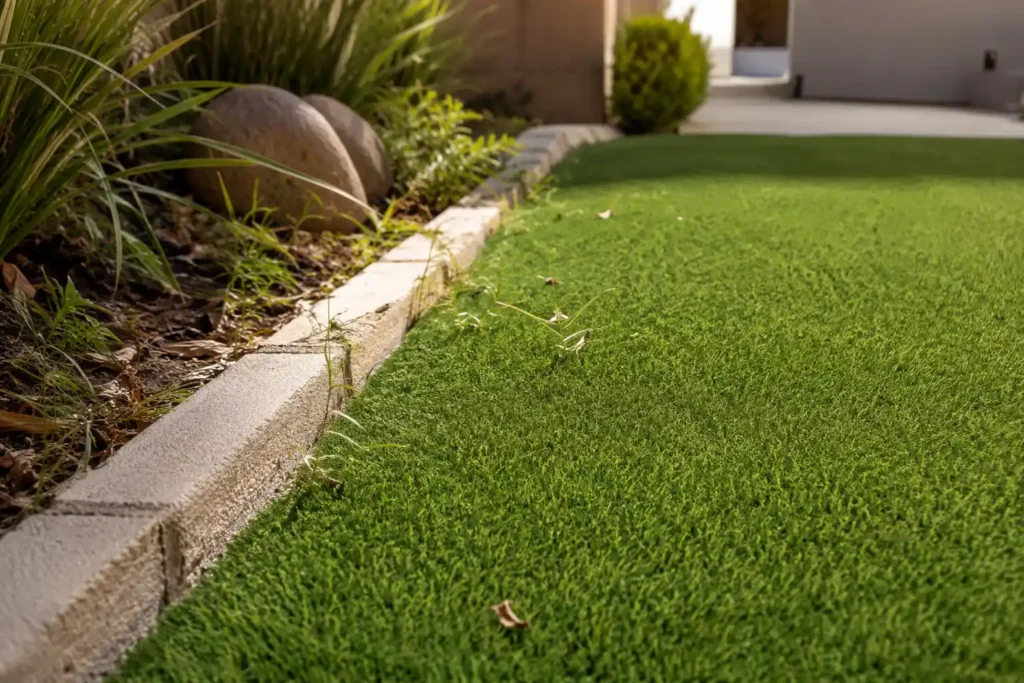
The Best Ways to Stop Weeds Under Artificial Grass in Midrand
Weeds pushing through a brand-new lawn feel like a betrayal. You paid for a low-maintenance surface, yet a stubborn dandelion still finds its way through a seam. Fortunately, the fix rarely comes down to bad luck. Instead, it usually comes down to what happens before the grass ever gets laid.
This guide walks through why weeds break through artificial grass in the first place, and it explains exactly how a proper weed barrier, correct installation, and simple ongoing care keep Midrand lawns clean for years.
Why Weeds Still Grow Through Artificial Grass
Synthetic turf blocks sunlight far better than soil ever could, so most weed seeds never germinate under it. However, gaps do exist. Seams, edges, and drainage holes let light and airborne seeds slip through over time. Wind also blows dust and organic debris onto the surface, and this debris builds up in the pile and eventually forms a thin layer that seeds can root into.
Consequently, the real vulnerability isn’t the grass itself. It’s the base beneath it. If installers skip ground preparation or use the wrong barrier, roots from the surrounding lawn or old weeds can push straight up through the base and into the turf.
What a Weed Barrier Actually Does
A weed barrier, sometimes called a weed membrane or landscape fabric, sits between the compacted base and the underside of the turf. It blocks light, so dormant seeds beneath it never sprout, and it also separates the sub-base from the soil below, which keeps the foundation stable.
Two main types exist. Woven geotextile fabric handles heavy foot traffic well and suits busy family gardens or landscaping turf installations. Non-woven fabric, on the other hand, costs less and drains water faster, so it often works better for pet areas where fast drainage matters more than raw strength.
For pet turf specifically, some installers skip the membrane altogether to maximise drainage and reduce odour. In that case, a well-compacted stone base paired with a pet-safe pre-treatment gives similar long-term protection without trapping moisture underneath, according to CCGrass’s base preparation guide.
Installation Techniques That Actually Prevent Weeds
Getting the base right matters more than the grass itself. First, excavate the area properly, removing all existing grass, roots, and organic matter. Any leftover root left in the ground will eventually push through, no matter how good the barrier above it is.
Next, compact a stone base of roughly 50 to 75mm, sloping it slightly so water drains away rather than pooling. Once the base sits firm and level, roll out the weed membrane across the entire area. Overlap each seam by at least 100mm, and always tape or pin the joins so gaps don’t open up as the ground settles.
After the membrane goes down, lay the turf directly on top and secure the edges with galvanised pins spaced every 150 to 200mm around the perimeter. Loose edges lift over time, and once a gap opens, light reaches the soil below and weeds follow quickly, as explained in ReTurf’s guide to weed barriers in turf installations. For high-traffic zones like schools, our playground turf installations use an extra layer of pinning around edges and drainage points for exactly this reason.
Maintenance That Keeps Weeds from Returning
Even with a perfect installation, artificial grass still needs occasional attention. Debris accumulates over months, and once enough organic matter settles into the pile, it creates a growing medium of its own, right on the surface.
Therefore, rinse the lawn periodically to clear dust, pollen, and leaf litter before it builds up. Brushing the fibres upright every few months also helps prevent matting, which otherwise traps moisture and speeds up debris build-up. If a weed does appear, pull it out by hand as soon as you spot it, since roots that establish themselves become far harder to remove later. A quick check of the edges and seams every season catches loose pins or lifted joins before they turn into a real problem.
Prevention Tips for Long-Term, Weed-Free Turf
Beyond routine care, a few small habits go a long way. Keep garden beds bordering the lawn well maintained, because weed seeds from an overgrown flowerbed travel further than most people expect. Trim back any plants that overhang the turf edges too, since falling leaves and seed pods land directly on the surface and start the debris cycle all over again.
It also helps to inspect drainage holes occasionally. Blocked holes force water to sit on the surface, and standing water combined with trapped debris creates ideal conditions for weed growth. Clearing them takes minutes and prevents a much bigger headache down the line.
Getting the Installation Right the First Time
Weed problems almost always trace back to shortcuts taken during installation, not a flaw in the turf itself. A proper base, a correctly overlapped membrane, secure edging, and light seasonal care together keep a lawn weed-free for well over a decade.
Our team handles every stage of this process for homes, schools, and businesses across Midrand, from ground preparation through to the final pinned edge. If you’re planning a new artificial lawn or want to fix an existing one that keeps sprouting weeds, get in touch with our team for a site assessment and a free quote.