
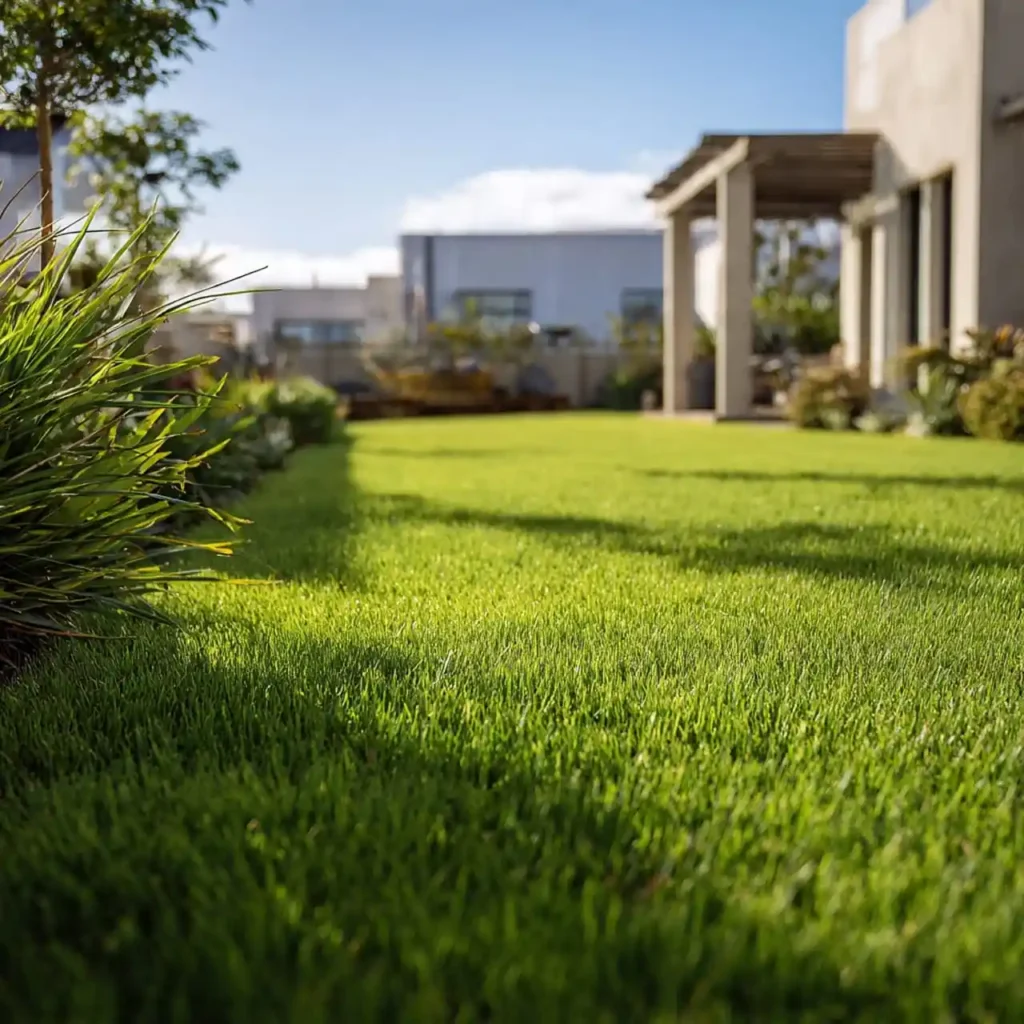
How to Maintain a Lush Green LM Berea Lawn All Year Round
Spring wakes up every garden in Midrand, and lawns are no exception. As temperatures rise and daylight hours stretch, LM Berea Grass shifts out of its winter rest and starts pushing fresh, green growth. Yet not every lawn greens up evenly. Some patches stay dull or yellow while others flourish. So, what separates a lawn that thrives from one that struggles?
At Turf Company Midrand, we install and maintain LM Berea Grass across shaded gardens throughout the area. Because we see this transition every season, we know exactly what helps this grass hold its colour from the first spring shoot right through to summer. This guide explains why LM Berea Grass greens up in spring and how you can keep that colour consistent all year.
What Makes LM Berea Grass Turn Green in Spring?
LM Berea Grass is a warm-season variety, which means it naturally slows down and dulls in colour during winter. Once soil temperatures climb above roughly 15°C, though, the grass reactivates. Chlorophyll production increases, roots start absorbing more nutrients, and new leaf blades emerge. Because LM Berea Grass tolerates shade so well, it also responds faster than sun-loving varieties once temperatures rise, since it doesn’t rely on maximum sunlight to fuel growth.
This natural green-up, however, isn’t automatic. Soil quality, watering habits, and mowing practices all influence how quickly and how evenly your lawn recovers. A lawn planted in poor, compacted soil will green up slower than one grown in nutrient-rich organic soils. Similarly, a lawn that was scalped or neglected over winter takes longer to bounce back. Understanding these factors helps you give your lawn exactly what it needs at the right time.
Spring Care Tips for LM Berea Grass
Getting your lawn to green up quickly and stay that way takes a bit of seasonal attention. Below, we break down the key care areas that matter most during spring.
Watering Deeply, Not Often
As growth ramps up, LM Berea Grass needs consistent moisture to support new leaf and root development. Rather than watering lightly every day, water deeply two to three times a week. This encourages roots to grow downward in search of moisture, which builds a stronger, more drought-resistant lawn. Shallow, frequent watering, on the other hand, keeps roots close to the surface and leaves your lawn vulnerable during dry spells later in the year.
Feeding at the Right Time
Once your lawn shows clear signs of active growth, apply a balanced, nitrogen-rich fertiliser to support leaf development and deepen that green colour. Feeding too early, while the grass is still dormant, wastes fertiliser and can encourage weed growth instead. If your soil has become compacted or depleted over winter, working in fresh compost or lawn dressing before feeding gives your lawn an even stronger foundation to grow from.
Mowing to Encourage Density
Mowing plays a bigger role in lawn colour than most homeowners realise. Cutting too short stresses the grass and exposes soil to sunlight, which invites weeds and moisture loss. Instead, raise your mower height slightly for LM Berea Grass, since it thrives with a slightly taller cut in shaded areas. Regular mowing, done consistently rather than all at once, also encourages denser growth, and denser grass naturally looks greener because it shades out competing weeds.
Managing Shade and Airflow
Because LM Berea Grass grows in low-light areas, spring is also a good time to check overhead tree canopies and nearby structures. Trimming overhanging branches improves airflow and lets more filtered light reach the lawn, which supports faster, more even greening. Poor airflow, by contrast, traps moisture against the leaf blades and increases the risk of fungal problems just as the growing season begins.
Common Spring Problems and How to Avoid Them
Even healthy LM Berea Grass lawns run into the occasional setback during the transition out of winter. Patchy green-up is the most common complaint, and it usually points to uneven watering, compacted soil, or leftover thatch smothering new shoots. Aerating compacted areas, mentioned above, and topping up with fresh topsoil where needed both help correct this quickly.
Yellowing patches can also appear if fertiliser gets applied unevenly or too heavily in one spot. To avoid this, feed your lawn slowly and evenly, ideally with a spreader rather than by hand. If problem areas persist despite good watering and feeding, it’s worth having your soil checked, since nutrient deficiencies often hide beneath an otherwise healthy-looking lawn.
For further reading on getting the timing right for seasonal lawn maintenance, the Royal Horticultural Society’s spring and summer lawn care guide offers useful general principles that apply well beyond the UK climate. Likewise, the University of Florida’s guide to proper mowing height explains clearly why cutting height has such a strong impact on root depth and overall lawn resilience.
Why Choose Turf Company Midrand for Your Lawn
Every garden greens up differently, depending on shade, soil, and how the lawn was cared for through winter. That’s why a one-size-fits-all approach rarely works. At Turf Company Midrand, we assess your garden’s specific conditions before recommending a care plan, whether that means adjusting your watering schedule, enriching your soil, or simply changing how you mow.
Beyond LM Berea Grass, we also supply and install Kikuyu Grass, artificial grass, and a full range of organic soil products, so your entire garden gets the right treatment, not just the lawn. If your LM Berea Grass isn’t greening up the way it should this spring, our team is ready to help.
Ready to give your lawn the spring boost it needs? Get in touch with Turf Company Midrand, and we’ll help your LM Berea Grass reach its full, vibrant colour this season.
Recent Posts:
LM Berea Grass Installation: Is It Worth the Extra Cost in Midrand?
Why Artificial Grass Is the Best Investment for Midrand Homes
LM Berea vs Kikuyu Grass: Which Is Best for Midrand?