
Kikuyu Lawn Maintenance in Midrand Before Spring Begins
Late winter is a quiet but important season for Kikuyu grass. Your lawn looks dormant, yet it’s already preparing for spring growth beneath the surface. Because Midrand experiences cold, dry Highveld winters, proper Kikuyu grass care during this period protects your lawn and sets it up for a lush recovery. Below, we share practical, region-specific tips to help your Kikuyu grass come through the cold months strong.
Why Kikuyu Grass Goes Dormant in Winter
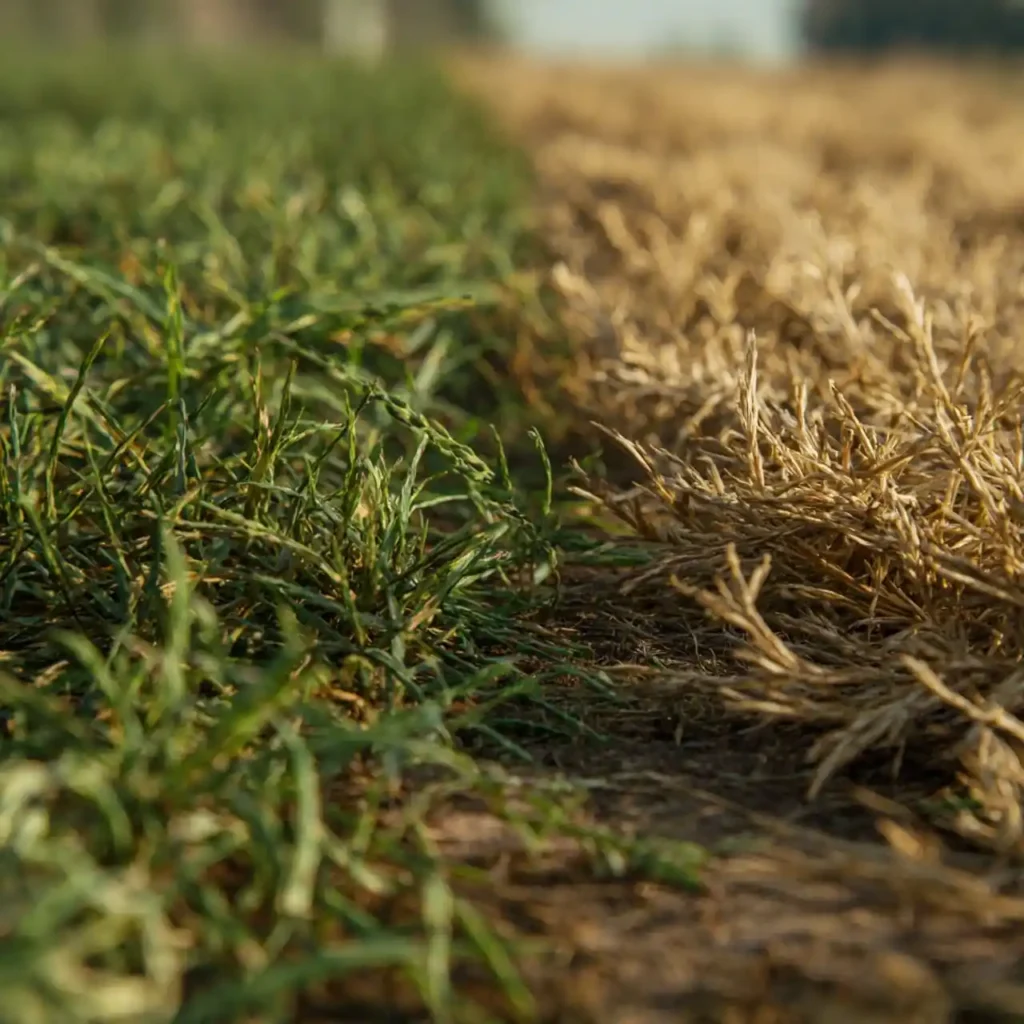
Kikuyu is a warm-season grass, so it naturally slows down once temperatures drop. In Midrand, night frost and short days push the grass into dormancy from around June through August. As a result, the lawn turns brown or straw-coloured. This isn’t a sign of a dying lawn. Instead, it’s a normal survival response, and the grass will green up again once spring warmth returns. Understanding this cycle helps you avoid unnecessary panic and, more importantly, unnecessary intervention that can do more harm than good.
Mow Less, and Raise the Blade
During late winter, Kikuyu grass barely grows, so frequent mowing isn’t necessary. Instead, cut only when needed, and raise your mower blade slightly higher than your summer setting. A taller cut protects the crown of the grass from cold stress and reduces the risk of scalping. Because dormant grass repairs itself slowly, scalped patches can stay bare well into spring. Therefore, patience with the mower pays off later.
Water Sparingly, Not on a Summer Schedule
Overwatering is one of the most common late winter mistakes. Dormant instant lawns, including Kikuyu, need very little moisture while resting. A light watering roughly once every two to three weeks is usually enough to keep the crowns and roots alive through Midrand’s dry winter months. Always water in the morning, so the surface dries before nightfall. Evening watering, combined with frost, creates the perfect conditions for fungal problems, so it’s best avoided entirely.
Stay Off Frosted Grass
Highveld frost is harsh on dormant Kikuyu. When ice crystals form inside the grass blades overnight, foot traffic can rupture those cells and leave brown, footprint-shaped damage that lingers for weeks. Consequently, it’s worth waiting until the frost has fully melted, usually by mid-morning, before letting kids, pets, or garden staff walk across the lawn. This simple habit prevents avoidable scarring on an already stressed lawn.
Hold Off on Fertilising Until Growth Resumes
It’s tempting to feed a brown lawn in the hope of speeding up recovery, but fertilising dormant grass rarely helps and can even encourage disease. Rather, wait until you see the first signs of green shoots before applying a balanced fertiliser. If your lawn looked tired last season, late winter is a good time to plan ahead instead. Enriching the soil with quality organic soils, such as compost or lawn dressing, just before active growth begins gives roots the nutrients they need to bounce back quickly.
Preparing the Soil for Spring
Healthy soil is the foundation of a resilient Kikuyu lawn. Late winter is an ideal time to top up thin areas with topsoil and level out any uneven patches before the growing season starts. Because Kikuyu spreads quickly once temperatures rise, small repairs done now fill in fast during spring, saving you from bigger patch jobs later.
Watch for Weeds During the Dormant Period
Dormant Kikuyu offers less competition against winter weeds, which can take advantage of the bare, brown grass. Keep an eye out for early weed growth and remove it by hand where possible, since most herbicides work best when applied to actively growing turf. Addressing weeds early, rather than waiting for a full spring clean-up, keeps your lawn looking tidier through winter and prevents weeds from establishing deep roots.
Planning a Fresh Start This Spring
If your existing lawn has thinned out, developed bare patches, or struggled through repeated winters, late winter is a smart time to plan a renewal rather than wait for damage to worsen. Whether you’re in Kyalami, Blue Hills, or Saddlebrook, our team can assess your garden’s soil, sun exposure, and drainage before recommending the right approach. For gardens that battle heavy shade or high traffic all year round, low-maintenance artificial grass is also worth considering as a permanent, green solution.
Get Expert Help Before Spring Arrives
A little attention in late winter makes a big difference once the growing season begins. If you’re unsure how your Kikuyu lawn is coping, or you’d like a professional assessment before spring, get in touch with Turf Company Midrand. Our team knows Midrand’s climate and soil conditions well, and we’re ready to help your lawn come back stronger than ever.
Sources: LawnStarter, “How to Grow and Maintain a Kikuyu Grass Lawn”; McKays Grass Seeds, “The Ultimate Guide to Kikuyu Grass Seeds”