
Can You Lawn Dress Kikuyu Grass with Compost in Midrand?
Kikuyu grass is one of the toughest lawns you can plant in Midrand. It handles foot traffic, bounces back from Highveld heat, and stays green through most of the growing season. However, even hardy Kikuyu grass needs the right soil support to truly thrive. That is where lawn dressing comes in.
If your Kikuyu lawn looks thin, patchy, or tired despite regular watering, the problem often sits below the surface. Lawn dressing corrects that. In this guide, we explain what lawn dressing is, why Kikuyu grass responds so well to it, and how to apply it correctly for a healthier, denser lawn.
What Is Lawn Dressing?
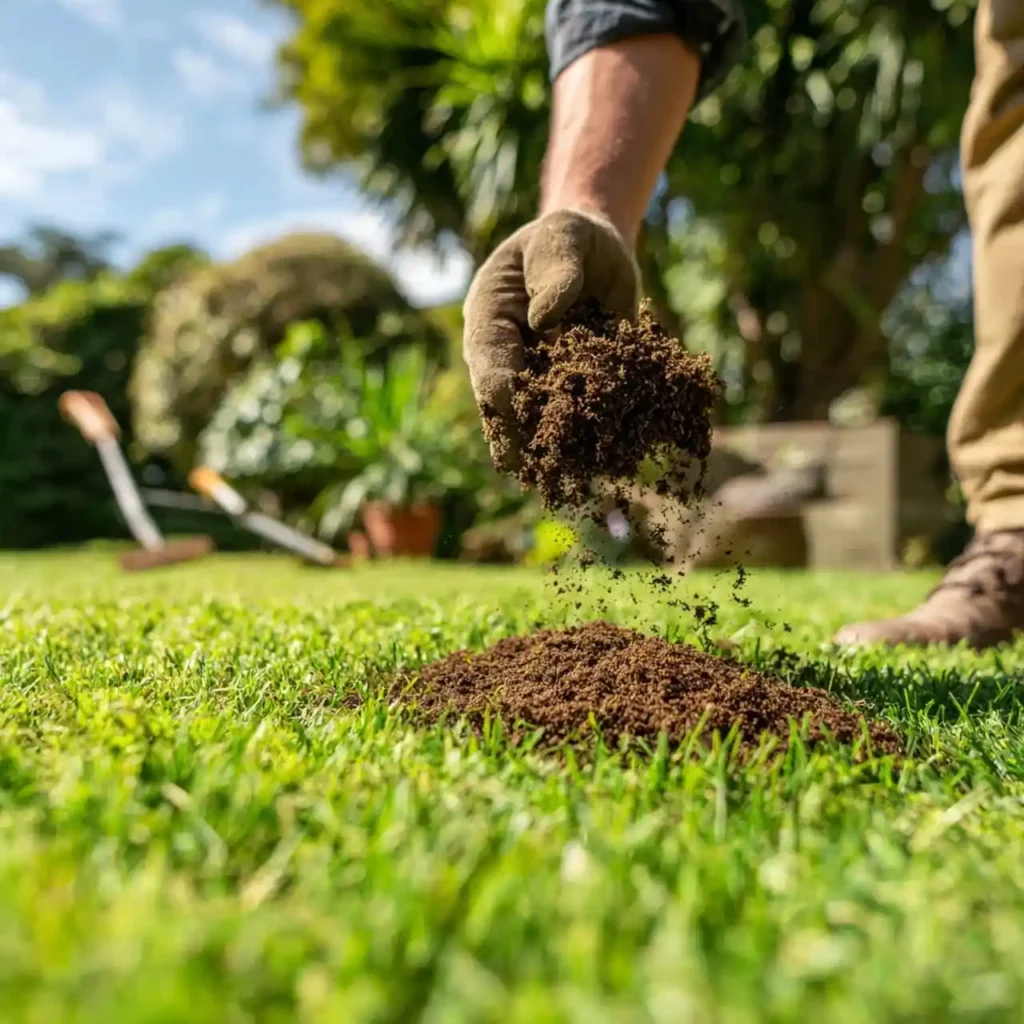
Lawn dressing is a thin layer of soil or organic material spread evenly over an established lawn. Unlike topsoil used for new installations, lawn dressing works its way down through the existing grass and into the root zone. As it settles, it levels uneven patches, feeds the soil, and helps the roots access more nutrients.
This practice is not new. Golf courses have used it for over a century to keep greens smooth and healthy. Homeowners across South Africa now use the same method to fix bare patches, improve drainage, and thicken thinning lawns. According to Clemson University’s Home & Garden Information Center, topdressing with organic material steadily improves soil structure and helps turfgrass hold onto nutrients and water more effectively over time.
Why Kikuyu Grass Benefits From Regular Dressing
Kikuyu spreads quickly through both stolons and rhizomes, which explains why it recovers so fast from wear and tear. That same growth habit, though, means it can also form thatch, a dense layer of dead stems and roots that builds up at soil level. Left unmanaged, thatch blocks water and nutrients from reaching the roots.
Lawn dressing helps break this cycle. A thin layer of quality soil encourages beneficial microbes to break thatch down naturally. It also smooths out the small dips and bumps that Kikuyu’s vigorous growth tends to create over a season. Because Midrand’s soils vary from sandy to heavy clay depending on the suburb, dressing also helps balance texture, so water drains properly instead of pooling on the surface.
Cornell University’s turfgrass programme notes that topdressing improves the growing environment for turf by correcting minor surface irregularities and helping reduce compaction, both common issues on established Kikuyu lawns that see regular use.
When to Lawn Dress Kikuyu Grass in Midrand
Timing matters more than most homeowners realise. Kikuyu is a warm-season grass, so it grows most actively from late spring through summer. Dress the lawn during this active growth window, ideally from October through to February. Applying dressing while Kikuyu grows strongly means the grass recovers quickly and grows up through the new layer within a couple of weeks.
Avoid dressing during winter dormancy. Kikuyu slows down significantly in cold months, and a heavy layer of material on dormant grass can smother it rather than help it.
How to Apply Lawn Dressing Correctly
Start by mowing the lawn slightly shorter than usual. This lets material reach the soil surface instead of sitting on top of long grass blades. Rake away any debris, dead grass clippings, or loose thatch before you begin.
Next, spread the dressing evenly across the lawn using a shovel, spreader, or rake, depending on the size of the area. Keep the layer thin, roughly five to ten millimetres deep. A common mistake is applying too much at once. Piling on thick dressing blocks sunlight and can suffocate healthy grass rather than encourage it.
Once spread, work the material gently into the lawn using the back of a rake or a soft broom. This helps it settle between the grass blades and reach the soil below. Water the lawn thoroughly afterwards. This settles the dressing into place and starts the process of nutrient uptake straight away.
For the best results, pair lawn dressing with a light application of compost beforehand. Compost adds organic matter and nutrients, while dressing levels and refines the surface. Together, they give Kikuyu grass everything it needs to establish deep, resilient roots.
Choosing the Right Material for Your Soil
Not all dressing material suits every garden. Sandy Midrand soils generally benefit from a dressing mix with more organic content to help retain moisture. Heavier clay soils, on the other hand, often need a sandier blend to improve drainage and prevent waterlogging around the roots.
If you are unsure which mix suits your property, our organic soils range includes options formulated for different soil types across Midrand. We also supply quality topsoil for gardens that need a deeper soil correction before dressing begins.
Keeping Your Kikuyu Lawn Healthy Long Term
Lawn dressing works best as part of a consistent routine rather than a once-off fix. Most Midrand lawns benefit from dressing once or twice a year, ideally paired with aeration if the soil has become compacted. Regular mowing at the correct height, along with steady watering through summer, keeps Kikuyu grass dense enough to resist weeds and recover fast from foot traffic.
If your lawn needs more than dressing, perhaps bare patches, uneven growth, or a full renovation, our instant lawns range offers a faster route to a lush, even Kikuyu lawn without the long wait for seed to establish.
Get Expert Help With Your Kikuyu Lawn
A healthy Kikuyu lawn starts with healthy soil beneath it. Whether you need advice on the right dressing mix for your garden or want a full lawn assessment, our team knows Midrand’s soil conditions inside out. Contact us today for a free, no-obligation consultation, and let us help your lawn reach its full potential.