The Difference Between Topsoil and Lawn Dressing for Midrand Homeowners
Every healthy lawn starts underground. Yet many Midrand homeowners reach for the wrong soil product and wonder why their grass still looks patchy. Understanding lawn dressing vs topsoil is the first step toward a lawn that actually thrives in Midrand’s climate.
Both products improve soil, but they solve different problems. So before you buy either one, it helps to know exactly what each does and when your garden needs it.
What Is Topsoil?
Topsoil is the uppermost, nutrient-rich layer of soil. It forms the foundation for new lawns, garden beds, and landscaping projects, especially where the natural ground has been stripped away during construction or where the existing soil is poor.
Because it’s loose and well-structured, topsoil gives grass roots room to spread and helps water and air move freely through the ground. This matters most before you lay anything new. If you’re preparing a bare patch for instant lawn, quality topsoil gives the roots a proper base to establish quickly, rather than fighting compacted, depleted ground. The Royal Horticultural Society makes a similar point, noting that topsoil works well for new beds, borders, and as a base for turf laying, particularly where natural soil is poor or missing altogether.
What Is Lawn Dressing?
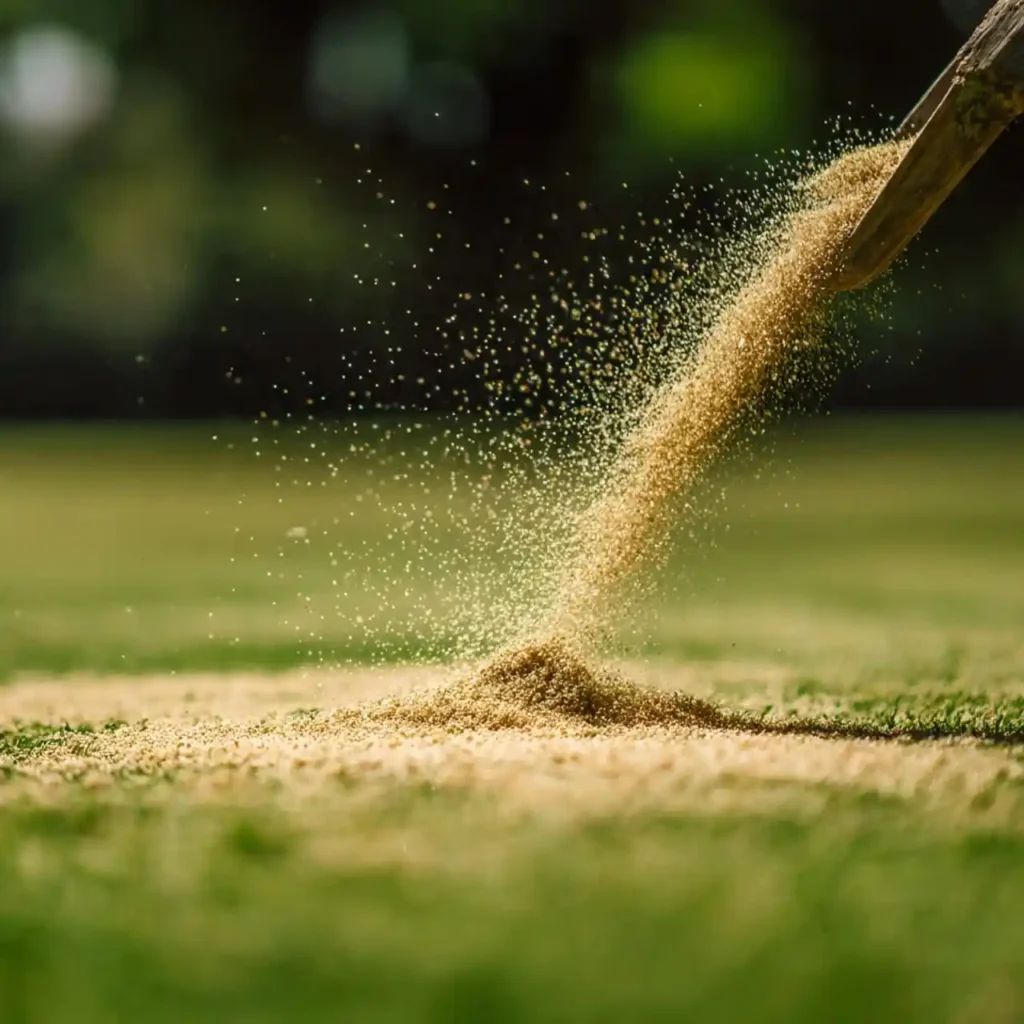
Lawn dressing works differently. Rather than creating a new growing layer, it improves and levels a lawn that already exists. Over time, nutrients in the soil deplete, foot traffic compacts the ground, and small dips and bumps appear across the surface. Lawn dressing addresses all three issues at once.
Applied as a thin, even layer over existing grass, lawn dressing settles into the soil below while the grass continues growing right through it. As a result, thin patches thicken, uneven areas level out, and the lawn recovers a healthier colour within a few weeks. Unlike topsoil, it’s not meant to bury or replace the existing ground; it’s meant to feed and refresh it.
Lawn Dressing vs Topsoil: The Key Differences
The clearest way to separate the two comes down to timing and purpose. Topsoil goes down before grass exists, whereas lawn dressing goes down after grass is already established. Put simply, topsoil builds a foundation, and lawn dressing maintains one.
Texture differs too. Topsoil tends to have more body, since it needs to support root systems and hold its structure under new turf. Lawn dressing, by contrast, stays finer and lighter, so it can settle between blades of grass without smothering them. Getting this distinction wrong causes real problems: piling topsoil onto an established lawn can bury and choke the grass, while using lawn dressing to prepare bare ground won’t give new roots enough depth or structure to establish properly.
Rolawn’s guide to soil improvement reinforces this idea, explaining that different soil improvers suit different jobs, and that matching the product to the task produces far better results than treating all soil amendments as interchangeable.
When to Choose Topsoil for Your Midrand Garden
If you’re starting from scratch, topsoil is almost always the right call. New garden beds, raised beds, and any area being prepared for instant lawn all need a solid, nutrient-rich base first. This applies especially to newer Midrand developments, where builders often strip away the natural topsoil during construction, leaving behind compacted, lifeless subsoil that grass simply won’t establish in.
Topsoil also suits larger regrading projects, where you need to change the slope or level of a garden before landscaping begins. In these cases, pairing topsoil with organic soils and compost gives new lawns and beds the best possible start.
When to Choose Lawn Dressing for Your Midrand Garden
If your lawn already exists but looks tired, bumpy, or thin in places, lawn dressing solves that more precisely. Established Kikuyu Grass lawns across Midrand often develop minor unevenness after a few seasons of foot traffic and rain, and a light dressing corrects this without disturbing the grass itself.
Spring and early summer work best for application, since grass grows most actively during these months and recovers from the process quickly. Lawn dressing also helps bare patches recover, because it improves the growing conditions right where new grass needs to spread.
Can You Use Both Together?
In many Midrand gardens, the answer is yes. A typical project starts with topsoil to prepare bare ground, then moves to instant lawn installation, and later relies on periodic lawn dressing to keep that lawn healthy for years afterward. Compost often joins the mix too, since it boosts fertility at any stage of the process.
Rather than guessing which product your garden needs, it makes sense to have your soil assessed first. Midrand’s suburbs vary considerably in soil type, drainage, and sun exposure, so a one-size-fits-all approach rarely delivers the results you’re after.
Getting the Right Soil for Your Midrand Lawn
Ultimately, lawn dressing and topsoil aren’t competing products; they’re two stages of the same process. Topsoil builds the foundation, and lawn dressing keeps that foundation performing well long after installation day.
Turf Company Midrand supplies and applies both, alongside instant lawns and artificial grass, so every stage of your garden’s soil health is covered under one roof. If you’re unsure which product your lawn needs, a site assessment will settle the question quickly and set your garden up for the season ahead.