Why UV-Protected Artificial Grass Is Ideal for Midrand Homes
Midrand sees strong sun almost every month of the year. That sun looks great on a lawn day, but it slowly wears down cheap synthetic turf. If you want your artificial grass to stay green, soft, and full for years, UV protection is the feature that matters most.
This guide breaks down how UV-resistant fibres work, why colour fading happens, how summer heat speeds up wear, and what to check for when you choose quality turf.
Why UV Protection Matters for Artificial Grass
Ultraviolet radiation breaks down the chemical bonds inside synthetic fibres. Over time, this process weakens the plastic, dulls the colour, and makes blades brittle. Without proper UV stabilisers, turf can start looking tired within a year or two, especially on north-facing gardens that get sun for most of the day.
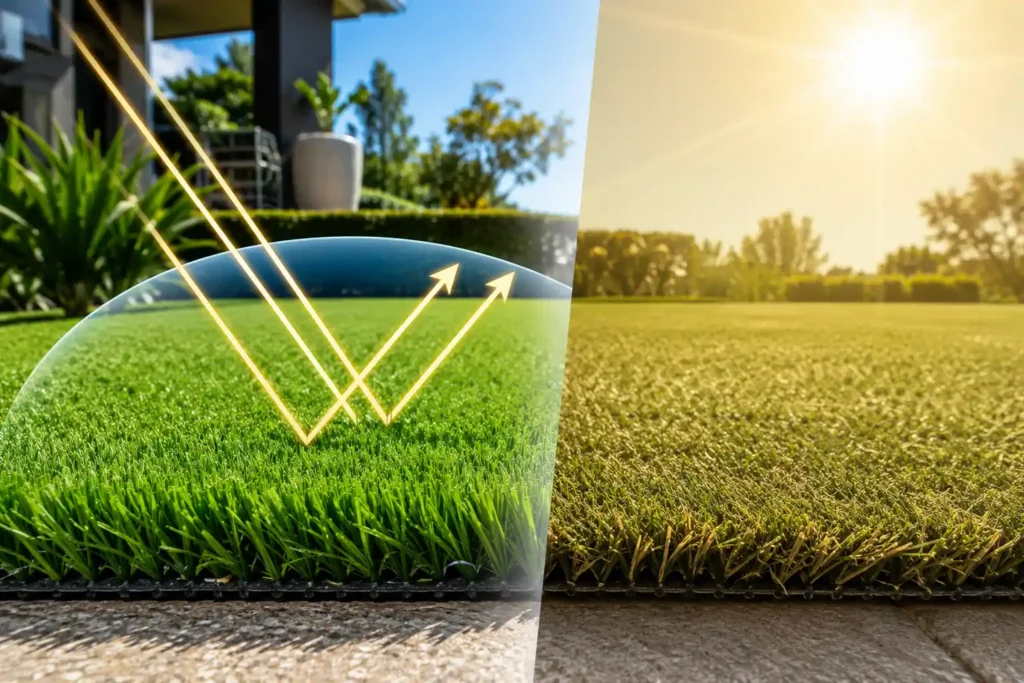
Quality manufacturers add UV inhibitors directly into the yarn during production. These additives act like sunscreen for the grass. They absorb harmful rays before the rays can damage the polymer structure, so the fibres keep their strength and shine for much longer. Independent testing on synthetic turf fibre durability shows a clear pattern: fibres that contain a higher concentration of UV stabiliser retain most of their tensile strength even after thousands of hours of accelerated sun exposure, while fibres with a lower stabiliser dose lose a large share of that strength far sooner. That gap shows exactly why the quality of UV treatment, not just its presence, decides how long a lawn lasts.
Homeowners in Midrand deal with this daily. Because the region sits at altitude on the Highveld, UV intensity is higher than at sea level, and gardens face long, unshaded exposure through summer. Turf without proper stabilisers simply cannot keep up.
How UV-Resistant Fibres Are Made
UV-resistant fibres start with a base polymer, usually polyethylene or a polyethylene-nylon blend, and manufacturers mix in stabilising additives before extrusion. These additives work in a few different ways. Some reflect UV rays away from the fibre surface. Others absorb the radiation and convert it into harmless heat. A third type mops up the free radicals that UV exposure creates inside the plastic, which stops the degradation chain before it spreads.
Manufacturers blend these additives into a masterbatch, then feed it into the fibre during production so the protection sits inside the material rather than on top of it. Because manufacturers build the protection into the fibre rather than spray it on top, it does not wash off, wear away, or need reapplying. Sunlight breaks down the chemical structure of synthetic materials over time, so this stabilising layer is what keeps the fibres intact rather than any surface coating. Good turf keeps this protection active for well over a decade, while poor turf starts to show cracks in the coating within a season or two.
Understanding Colour Fading in Synthetic Turf
Colour fading is usually the first sign that a lawn’s UV protection is failing. Turf manufacturing uses pigments that sit on the surface of the fibre, and constant UV exposure slowly breaks down those pigment molecules. Green fades to a washed-out olive, then eventually to a grey or brown tone that no longer looks natural.
Cheaper turf often uses thinner fibres with less pigment locked in, so fading shows up faster. Thicker, well-pigmented fibres hold their colour because there is simply more material for the UV rays to work through before any visible change appears. If you hold a blade of turf up to strong light and can see straight through it, that is a fair sign the fibre is too thin for reliable long-term use, especially under Midrand’s sun.
Good manufacturing also blends multiple shades of green into each fibre bundle, which helps disguise early fading and gives the lawn a more natural look even after years outdoors. This is one reason our Landscaping Turf range uses multi-tone fibres rather than a single flat colour.
Signs Your Turf Is Losing UV Protection
A few warning signs tell you that UV degradation has already started. Blades that feel stiff or brittle instead of soft indicate the polymer is breaking down. Colour that looks patchy rather than evenly faded often points to inconsistent stabiliser dosing during manufacturing. Fibres that snap easily when bent back and forth have likely lost much of their original flexibility.
Once these signs appear, you cannot reverse the damage. Replacement, rather than repair, becomes the only real option, which is exactly why choosing the right turf upfront saves money over the long run.
Summer Heat and Its Effect on Artificial Grass
Heat and UV exposure work together, not separately. Direct sun raises the surface temperature of dark-coloured artificial grass well above the surrounding air temperature, sometimes by 20°C or more on a still, sunny afternoon. This extra heat accelerates the chemical reactions behind UV degradation, so a hot Midrand summer does more damage in a shorter time than mild weather would.
High surface heat also affects backing materials and adhesives, not just the visible fibres. Backing that softens or warps under heat can cause seams to lift or infill to shift, which changes drainage and stability over time. Manufacturers design turf for hot climates with backing systems that handle sustained high temperatures, along with fibres that shed heat rather than trap it.
Good drainage plays a supporting role here too. A base that lets water pass through quickly helps cool the surface after watering or rain, which takes some pressure off the fibres during the hottest months. This matters just as much for high-use areas like Multisport Turf and Pet Turf, where foot traffic and heat combine to stress the fibres from two directions at once.
Practical Ways to Reduce Heat Stress
You cannot change Midrand’s climate, but you can reduce how much heat your lawn absorbs. Rinsing the turf with water on especially hot days cools the surface quickly and takes only a few minutes. Positioning outdoor furniture or shade sails over high-use sections reduces direct exposure during peak afternoon hours. Choosing a lighter shade of green, where the design allows, also reflects more heat than a very dark tone would.
None of these steps replace proper UV stabilisation, but they do ease the daily strain on turf that is already well protected.
Choosing Quality Turf Built for Midrand’s Climate
Not all artificial grass handles sun exposure the same way, so the selection stage matters more than most buyers realise. Ask about the fibre material first: nylon generally resists UV damage better than polypropylene, though good polyethylene blends with strong stabilisers still perform well. A manufacturer’s warranty against premature UV degradation is also worth checking, since offering that cover reflects how seriously the industry treats this issue as a baseline requirement. A warranty that specifically covers UV fading, rather than a general product warranty, is a useful indicator of manufacturer confidence.
Check the fibre thickness and density next. Thicker blades packed closely together shield each other from direct sun and generally fade more slowly than thin, sparse turf. Ask for a sample and leave it outdoors in full sun for a few weeks if you can, since this gives a rough sense of how the colour holds up before you commit to a full installation.
Finally, match the turf type to how the space gets used. A Playground Turf product needs strong UV resistance combined with impact absorption, while a Golf Putting Green needs UV stability alongside a tight, consistent pile for a true roll. Choosing turf that matches the specific application, rather than a generic all-purpose product, tends to deliver better results over the years that follow.
Get Expert Advice for Your Midrand Garden
Choosing turf with strong UV protection saves money and frustration down the line, since replacing faded or brittle grass costs far more than installing the right product the first time. Our team assesses sun exposure, soil, and drainage on-site, then recommends the right artificial grass range for your specific space and budget.
Contact us today to book a site visit and get a tailored quote for a lawn built to handle Midrand’s sun, season after season.