
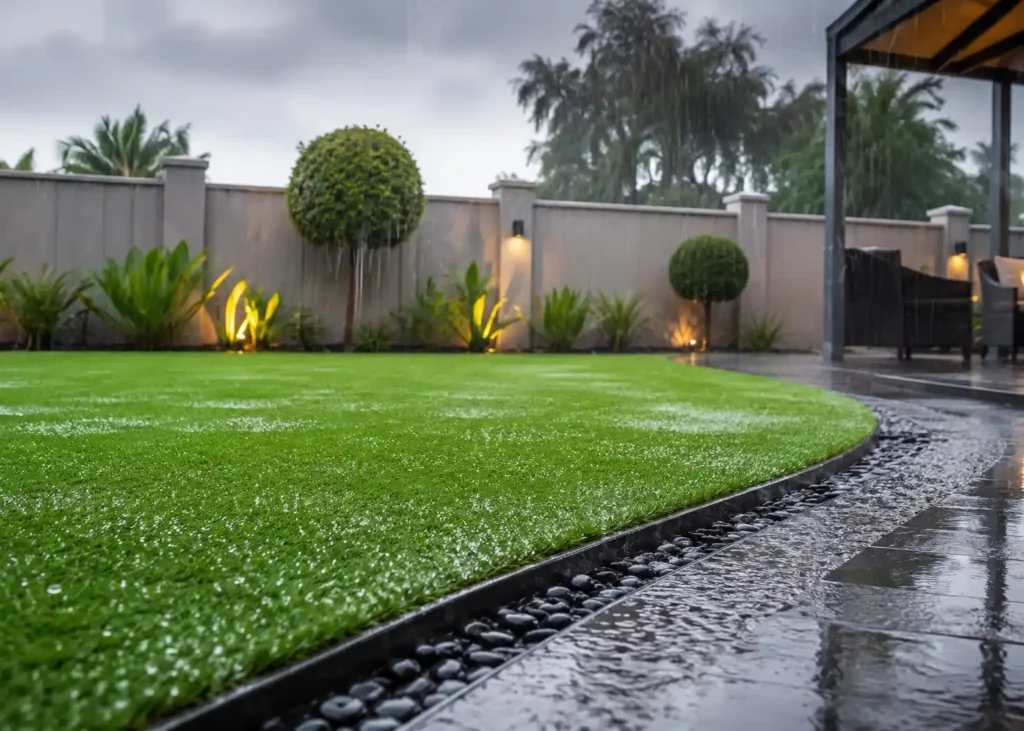
Artificial Grass vs Heavy Summer Rain in Midrand
Midrand’s summer storms arrive fast. One minute the sky is clear, and the next, hail and heavy rain pound the Highveld. These afternoon downpours are typical of the region’s climate, and they leave many gardens waterlogged for days. If your lawn turns into a mud pit every time it rains, artificial grass in Midrand offers a real solution. This guide explains how proper drainage, erosion prevention, and quality installation keep synthetic lawns dry, stable, and green all year round.
Why Midrand Gardens Struggle With Summer Rain
Midrand sits on the Highveld, an elevated region known for intense, short-lived thunderstorms between October and March. Because rain falls hard and fast, ordinary soil often can’t absorb it quickly enough. As a result, water pools on the surface, and low-lying areas of the garden turn soggy.
Clay-heavy soil makes the problem worse. It compacts easily and drains slowly, so puddles linger long after the storm passes. Over time, this creates muddy patches, encourages weed growth, and washes topsoil away from slopes and flowerbeds. For homeowners who want a lawn that stays usable through summer, addressing drainage is the first step.
The Cost of Poor Drainage
Standing water does more than inconvenience a garden. It drowns grass roots, invites mosquitoes, and erodes soil from exposed areas. Furthermore, repeated flooding can undermine paving, damage fencing, and carry sediment into stormwater drains. Left unmanaged, this cycle repeats every summer, so a long-term fix matters more than a quick patch.
How Artificial Grass Handles Heavy Rainfall
Unlike natural lawns, artificial grass is built with a perforated backing that lets water pass straight through the surface. Rain doesn’t sit on top of the turf. Instead, it flows down into the base layer below, where it disperses quickly.
This matters most during a Highveld downpour, when rainfall intensity can overwhelm a natural lawn within minutes. Because synthetic turf drains through its backing rather than across the surface, gardens stay walkable soon after a storm ends. There’s no mud tracked indoors, and no soggy grass to avoid for days at a time.
The Role of the Base Layer
Drainage performance depends on what lies beneath the turf, not just the turf itself. A well-built base uses layers of compacted stone that create channels for water to move away from the lawn. Without this foundation, even premium synthetic grass will hold water and develop soft patches.
That’s why proper site preparation always comes before installation. Excavating the area, compacting a stone sub-base, and grading the surface for a gentle fall are essential steps. When these fundamentals are skipped, drainage fails regardless of the grass quality used on top.
Preventing Erosion on Midrand Properties
Erosion becomes a serious issue on sloped gardens or properties near stormwater channels. Every storm washes a little more soil away, which gradually undermines retaining walls, pathways, and planted borders. Artificial grass helps limit this by holding the base layer in place and reducing surface run-off velocity.
For properties that combine synthetic and natural areas, healthy organic soils also play a role. Well-structured soil absorbs more water before it runs off, which lowers pressure on drainage systems elsewhere in the garden. Enriching planted beds with quality topsoil improves absorption and reduces the erosion that typically follows a hard Highveld storm.
Combining Turf Types for Better Results
Many Midrand gardens use a mix of synthetic and natural surfaces. In these cases, landscaping turf around patios and entertainment areas can pair well with natural lawn sections near flowerbeds. This combination reduces mud near high-traffic zones while keeping the softer look of real grass elsewhere. Pet owners in particular benefit from this setup, since pet-friendly turf resists staining and drains quickly after dogs have been outside in the rain.
Why Installation Quality Makes the Difference
Two lawns can use identical grass and still perform differently in a storm. The difference usually comes down to installation. A rushed job with a shallow base, poor compaction, or incorrect grading will trap water no matter how good the turf looks on day one.
Proper installation follows a clear sequence. First, the old lawn and topsoil get removed. Next, the area is levelled and compacted with a suitable aggregate base. A weed barrier goes down before the turf, which prevents growth from underneath and keeps drainage channels clear. Finally, the grass is laid, joined, and secured so it stays flat under heavy rain and foot traffic.
Signs of a Poor Installation
Warning signs include turf that lifts at the edges, water that pools instead of draining, and uneven surfaces that develop dips after a season of rain. These issues usually trace back to inadequate ground preparation rather than the grass material itself. Choosing an installer who follows recognised drainage practices, similar to the permeable surface principles used in stormwater management worldwide, protects your investment long after the first storm hits.
Getting a Storm-Ready Lawn in Midrand
Summer thunderstorms aren’t going away, but muddy gardens don’t have to be part of the season. With the right base preparation, quality turf, and correct grading, artificial grass keeps Midrand properties dry, tidy, and usable through even the heaviest downpours. If your garden struggles with mud and standing water every summer, get in touch with our team for a site assessment and a lawn built to handle whatever the Highveld sends its way.