
Protecting Artificial Grass from Outdoor Furniture in Midrand
A beautiful artificial grass lawn deserves furniture that suits it. Garden sets, braai stands, and loungers all add life to a Midrand garden, but they also carry weight. Left in one spot for too long, that weight presses the blades flat and stops them springing back. Fortunately, a few simple habits protect your lawn without limiting how you use it.
Why Heavy Furniture Damages Artificial Grass Fibres
Artificial grass fibres stand upright because of their structure and, in many cases, an infill layer beneath them. Constant pressure from a heavy object slowly breaks down that support. Over weeks, the blades lean over and stay that way, even after you move the furniture.
Understanding Fibre Flattening and Pile Memory
Manufacturers call this effect “pile memory.” Fibres bend under load and, at first, spring back once the weight lifts. However, prolonged pressure eventually trains them to stay flat. As one UK maintenance guide on artificial lawn care points out, the pile will flatten under heavy garden items just as natural grass would, so proactive care matters far more than reactive fixes.
Common Furniture Culprits in Midrand Gardens
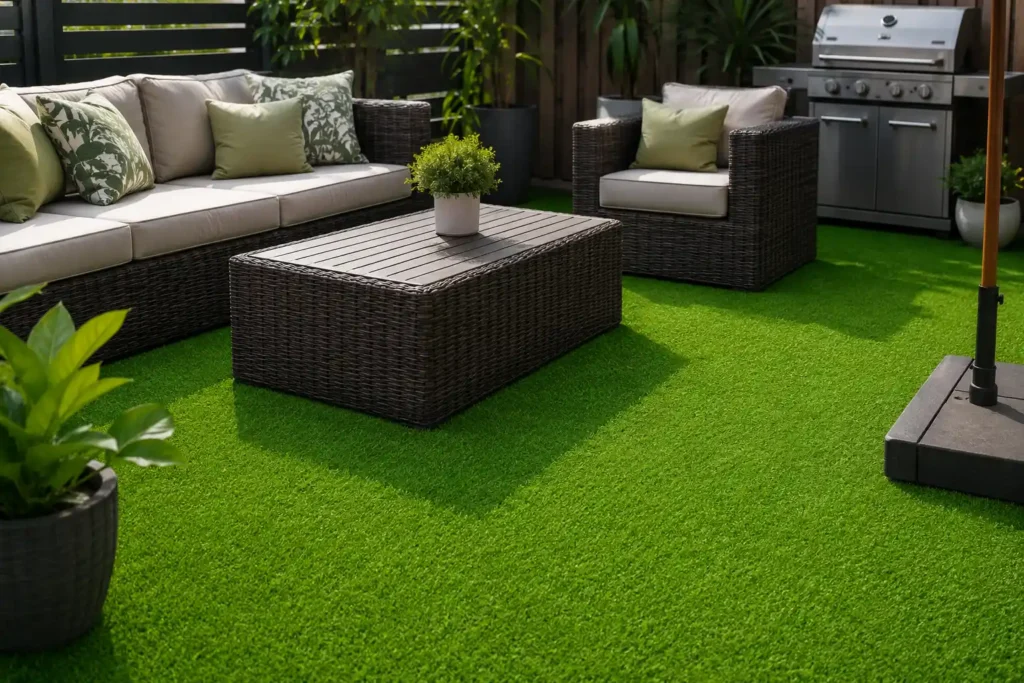
Garden benches, dining sets, and daybeds all place concentrated weight on small areas of grass. Braai stands add a second problem: heat. Meanwhile, umbrella stands and planters often sit in one exact spot for an entire season, which is precisely the kind of static load that causes the deepest flattening.
Practical Ways to Protect Your Artificial Grass from Furniture
Small adjustments make a big difference, and none of them require you to change how you enjoy your outdoor space.
Choose the Right Furniture Feet and Pads
Wide, flat feet spread weight across a larger surface area, so the pressure per square centimetre drops significantly. Therefore, swap narrow metal legs for broader bases wherever possible, and add rubber or felt pads under each leg. These pads also stop sharp edges from puncturing the backing.
Rotate and Move Furniture Regularly
Because no single patch of grass should carry the same load indefinitely, shift chairs, tables, and pot plants every few weeks. This simple habit allows compressed fibres to recover between sessions and prevents any one section of your landscaping turf from wearing faster than the rest of the lawn.
Use Furniture Coasters or Protective Mats
Coasters or small paving stones placed under table and chair legs distribute weight even further and keep moisture from pooling underneath. As a result, the grass beneath stays drier, which also reduces the risk of mould forming in shaded corners of the garden.
Special Considerations for Braais and Entertainment Areas
Braai areas bring an extra risk on top of simple weight, since heat and grease both threaten synthetic fibres.
Heat Protection Near the Braai
Always place a heat-resistant mat or paved section under the braai itself. Sparks, hot coals, and radiant heat can singe or melt artificial fibres in seconds, and that kind of damage cannot be brushed out. Consequently, many Midrand homeowners choose to pave or tile the immediate braai zone and keep the surrounding artificial grass for seating and entertaining instead.
Preventing Grease and Ash Damage
Wipe up spilled marinade, oil, or ash as soon as you notice it, since these substances stain fibres and attract dirt over time. A quick rinse with water usually lifts most residue before it sets in.
How to Restore Flattened Artificial Grass
Even with the best precautions, a chair or table leaves a mark occasionally. The good news is that flattened fibres are rarely permanent damage.
Brushing and Fluffing Techniques
Lift the furniture, then brush the affected area against the direction of the pile using a stiff broom or a turf rake. Warm water and gentle brushing loosen fibres that have been compressed for a long period. A detailed breakdown from The Motz Group explains that topping up infill in furniture zones gives the fibres the support they need to stand back up after repeated pressure.
When to Call a Professional
If brushing does not restore the pile after a few attempts, the infill level underneath may be too low, or the backing may have been compressed unevenly. In that case, a professional inspection identifies whether the lawn simply needs more infill or a small section replaced. Our team at Turf Company Midrand can assess this during a routine artificial grass maintenance visit.
Choosing Furniture-Friendly Artificial Grass from the Start
The easiest way to protect your lawn from furniture damage is to start with a quality installation. A dense pile, sufficient infill, and a properly compacted base all reduce how quickly fibres flatten under load. Before choosing an installer, it helps to understand what separates a reliable artificial grass installer from one that cuts corners on infill and base preparation. A well-built lawn also copes better with Midrand’s climate swings, much like the water savings homeowners see when they switch to artificial grass during the region’s dry seasons.
Furniture and artificial grass can coexist without a fight. Rotate your pieces, add protective feet, and keep heat sources away from the fibres, and your lawn will stay lush for years. If your Midrand garden already shows flat, matted patches, or if you are planning a new installation designed to handle furniture and braai nights alike, get in touch with Turf Company Midrand for a free site assessment.