Can Artificial Grass Help Reduce Allergies for Midrand Families?
Spring and summer bring warmer days in Midrand, but for many families they also bring itchy eyes, sneezing, and blocked noses. Grass pollen is one of the most common seasonal allergy triggers, and natural lawns release it every time the grass grows, flowers, or gets mowed. That’s why more Midrand households are switching to artificial grass as a practical way to cut pollen exposure while still enjoying a green, usable garden.
This post looks at why pollen builds up in natural lawns, how artificial grass changes that picture, and why it makes such a difference for children and allergy sufferers at home.
Why Grass Pollen Triggers Allergies in Midrand Gardens
Grass pollen is light and windborne, so it travels easily between gardens, parks, and open spaces. According to the Asthma and Allergy Foundation of America, grass pollen is one of the leading causes of seasonal allergy symptoms, and it can drift in from neighbouring properties even if your own lawn isn’t the source. Mowing makes this worse. Every cut releases fresh pollen and plant debris into the air, right where children play and pets roll around.
Midrand’s climate adds another layer. Warm, dry, windy days speed up pollen spread, while a lawn that’s watered and mowed on a schedule keeps producing it throughout the growing season. Families end up managing a garden that constantly works against their own comfort.
How Artificial Grass Cuts Pollen Exposure at Home
Switching to artificial grass removes the pollen source directly from your garden. Because synthetic turf doesn’t grow, flower, or need mowing, it stops generating the allergens that natural lawns release throughout the season.
A Cleaner Surface for Children to Play On
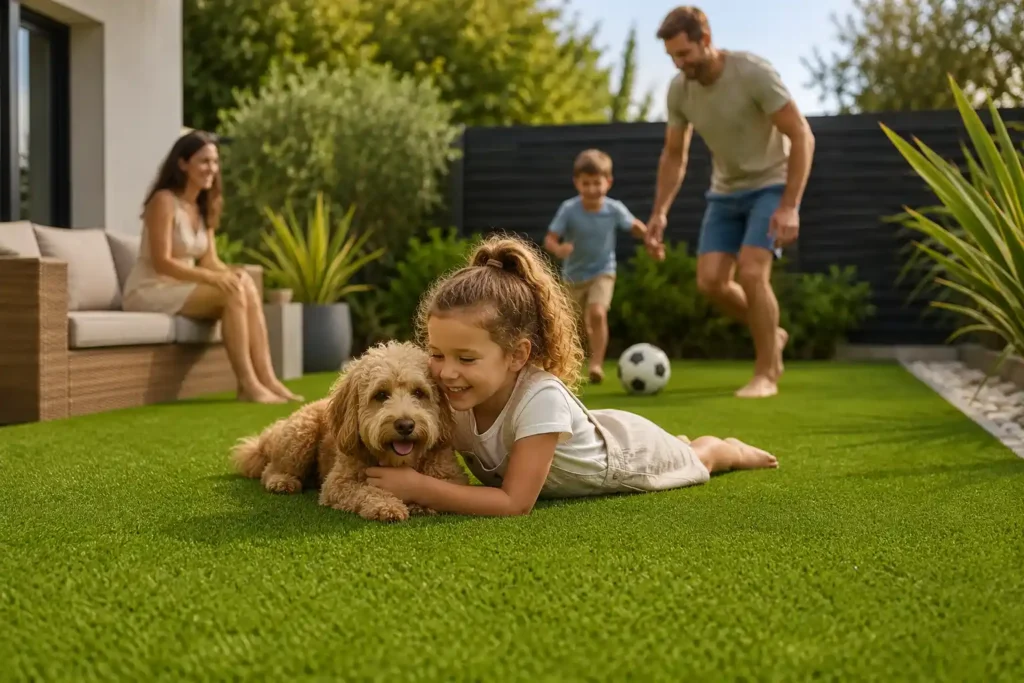
Children spend more time low to the ground than adults do, which puts them closer to pollen, grass clippings, and soil-based allergens. Our Playground Turf gives kids a soft, consistent surface without the seasonal pollen buildup of a natural lawn. Parents get peace of mind, and children get a play area that stays usable all year, whatever the pollen count is doing outside.
Less Mowing, Less Airborne Pollen
Because mowing disturbs grass and kicks pollen into the air, cutting it out of your routine has a direct effect on allergy symptoms. With artificial grass, there’s no mowing, no clippings, and no weekly disturbance of plant matter. The lawn stays visually consistent, and the air around it stays cleaner too.
Creating a Cleaner, Allergy-Friendly Outdoor Space
A garden isn’t only about the grass. Soil, mulch, and organic debris can also trap allergens and mould spores, especially after rain. That’s why site preparation matters as much as the surface itself. Every instant lawn and artificial grass installation we do starts with proper excavation and a compacted base, so water drains away instead of sitting and encouraging mould growth.
Easy to Clean, Hard for Allergens to Hide
Unlike natural lawns, artificial grass doesn’t hold onto pollen, pet dander, or dust the way soil and thatch do. A quick rinse or brush keeps the surface clean, which matters for households managing both grass allergies and pet allergies. Our Pet Turf range is built specifically for this, combining durability with a surface that’s simple to hose down and keep allergen-free.
Benefits for Children and Allergy Sufferers in Midrand
For families with allergy-prone children, small changes add up. KidsHealth from Nemours notes that reducing a child’s exposure to known allergens is one of the most effective ways to ease seasonal allergy symptoms, alongside medical treatment when needed. Removing a major backyard trigger, grass pollen, gives children more comfortable outdoor time without constant sneezing or watery eyes.
Adults benefit just as much. A garden that no longer needs mowing or fertilising means fewer chemical exposures too, since many lawn treatments carry their own allergy and sensitivity risks. Landscaping that combines artificial grass with well-planned garden beds, supported by the right Landscaping Turf, keeps outdoor spaces green and functional without the seasonal allergy trade-off.
Choosing the Right Artificial Grass for Your Family
Not every garden needs the same solution. Families in Kyalami and across Midrand often mix artificial grass in high-traffic play areas with natural lawn or garden beds elsewhere on the property, depending on how the space gets used. A site assessment helps determine where synthetic turf will have the biggest impact on comfort and allergy control, and where natural grass still makes sense.
If pollen season has been making your garden harder to enjoy, a shift toward artificial grass is a straightforward way to reclaim it. Get in touch with Turf Company Midrand for a site visit, and we’ll help you build an outdoor space your whole family, allergies and all, can actually relax in.