
Avoid These Common Lawn Dressing Mistakes in Midrand
A patchy lawn often has one root cause: incorrect lawn dressing. Many Midrand homeowners buy a bag of dressing, spread it, and hope for the best. Unfortunately, that approach usually backfires. Too much product, the wrong mix, poor timing, or careless watering can all undo months of hard work.
This guide breaks down the most common lawn dressing mistakes homeowners in Midrand make, and shows you how to avoid them.
Why Lawn Dressing Matters for Midrand Gardens
Midrand’s soil varies a lot from suburb to suburb. Some gardens sit on heavy clay that drains poorly. Others have sandy, nutrient-poor soil that dries out fast. In both cases, lawn dressing helps level the surface, replenish nutrients, and give your grass a stronger base to grow from.
Done correctly, dressing thickens thin patches and smooths out bumps. Done incorrectly, it can smother healthy grass, starve the roots of oxygen, or create the exact drainage problems you were trying to fix.
Mistake 1: Applying Too Much Dressing
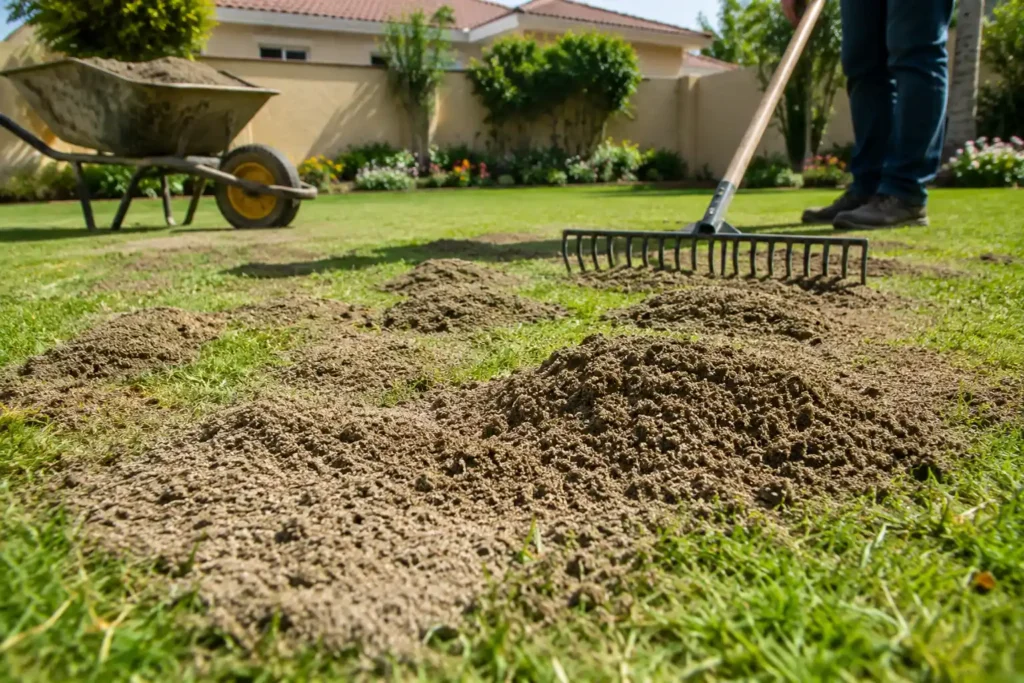
This is, by far, the most frequent error we see. Homeowners assume that a thicker layer will speed up recovery. Instead, it does the opposite.
Smothering the Grass
Grass blades need sunlight to photosynthesise. A layer that is too deep buries the leaf blades completely, cutting off light and air. Within days, the smothered patches turn yellow, then brown, then die off entirely.
As a rule, keep the layer to around 10mm for an even lawn, and never more than 15mm even over bare or uneven patches. If your lawn needs serious levelling, apply dressing in two or three thin sessions instead of one thick one. This lets the grass grow through each layer before you add the next.
Compacting the Root Zone
A heavy layer also compacts the soil beneath it once it settles. That compaction blocks water and oxygen from reaching the roots, so growth slows down instead of speeding up. If your lawn already struggles with compaction, aerate it first, then apply a thin, even layer of dressing.
Mistake 2: Using the Wrong Materials
Not all dressing mixes work the same way, and using the wrong one for your soil type causes more harm than good.
Ignoring Your Soil Type
Midrand gardens range from red clay to sandy loam. A dressing mix that works well on sandy soil can waterlog clay soil, while a mix built for clay can leave sandy soil short on nutrients. Before buying anything, get your soil assessed so the blend actually matches your garden’s conditions.
Skipping Quality Checks
Cheap, generic dressing often contains unscreened soil, weed seeds, or builder’s sand instead of proper sharp sand. Weed seeds germinate right alongside your grass, giving you a whole new problem to manage. Builder’s sand, meanwhile, compacts far more than horticultural sand and does little to improve drainage.
Rather stick to properly screened, organic soils designed specifically for lawn use. Our compost and topsoil ranges go through quality checks before they reach your garden, so you know exactly what you’re working with.
Mistake 3: Getting the Timing Wrong
Timing decides whether your lawn bounces back quickly or struggles for months.
Dressing at the Wrong Time of Year
Grass grows fastest in spring and early summer. Apply dressing during this active growing period, and the grass pushes through the new layer within a couple of weeks. Apply it in the depths of winter, when Midrand’s grass is dormant or semi-dormant, and the dressing sits on top with nothing growing through it. That leaves it exposed to wind, rain, and erosion for months.
Rushing After Aeration or Scarifying
Dressing works best right after aeration or scarifying, while the soil surface is open and receptive. Wait too long after either process, and the holes close up before the dressing can settle into them, reducing the benefit significantly.
Overlooking New Installations
If you’ve recently laid an instant lawn, hold off on dressing until the roots establish properly. Adding dressing too early can interfere with root-to-soil contact, which slows down establishment rather than helping it.
Mistake 4: Watering Incorrectly After Application
Even a perfectly applied layer of dressing fails if the watering routine afterwards goes wrong.
Watering Too Little
Dressing needs consistent moisture to settle into the lawn and support new growth. Skimp on watering, and the top layer dries out, hardens, and forms a crust that blocks air and water from reaching the roots below.
Watering Too Much
The opposite mistake is just as damaging. Overwatering saturates the dressing, washes it into low-lying patches, and can wash it off the lawn entirely on a sloped garden. It also encourages fungal problems, especially during Midrand’s humid summer months.
Getting the Balance Right
Aim for light, frequent watering in the first week after application, then ease into a deeper, less frequent schedule as the grass establishes. Early mornings work best, since they reduce evaporation and lower the risk of fungal disease taking hold overnight.
For more detail on soil-based top dressing techniques, the Royal Horticultural Society and BBC Gardeners’ World both offer useful, science-backed guidance that applies well beyond the UK climate.
Getting Professional Help Makes the Difference
Lawn dressing looks simple from the outside, but the details matter. The right depth, the right mix, the right timing, and the right watering routine all need to line up for your lawn to recover properly.
Turf Company Midrand handles every step of this process, from assessing your soil to applying the dressing and guiding you through aftercare. If your lawn needs levelling, thickening, or a nutrient boost, get in touch with our team for a free, no-obligation assessment.