
How Lawn Dressing Helps Fix Drainage Problems in Midrand Gardens
Midrand gardens sit on some of the heaviest clay soil in Gauteng. After summer storms, many lawns hold water for days. Grass turns yellow, roots suffocate, and puddles form in the same low spots every time. If this sounds familiar, lawn dressing in Midrand might be the fix your garden needs.
This post looks at why clay soil causes waterlogging, how lawn dressing changes soil structure, and what it means for root growth. It also explains when dressing helps and when your garden needs extra drainage work first.
Why Clay Soil Causes Waterlogging
Clay particles pack tightly together. Because the gaps between them are so small, water struggles to pass through. Instead of draining away, rainwater sits on top of the soil or just beneath the surface. This is exactly what happens across much of Midrand, where heavy clay subsoil sits under many properties.
Compaction makes the problem worse. Foot traffic, driving over the lawn, and even heavy furniture press soil particles closer together. As a result, air pockets disappear, and water has nowhere to go. According to the Royal Horticultural Society, waterlogged lawns develop moss, algae, and turf damage when compacted soil stops rainwater from draining properly.
Over time, waterlogged clay starves grass roots of oxygen. Roots then grow shallow, weak, and prone to disease. Once you understand this cycle, it becomes clear why simply reseeding a soggy lawn rarely works. The soil underneath needs attention first.
How Lawn Dressing Changes Soil Structure
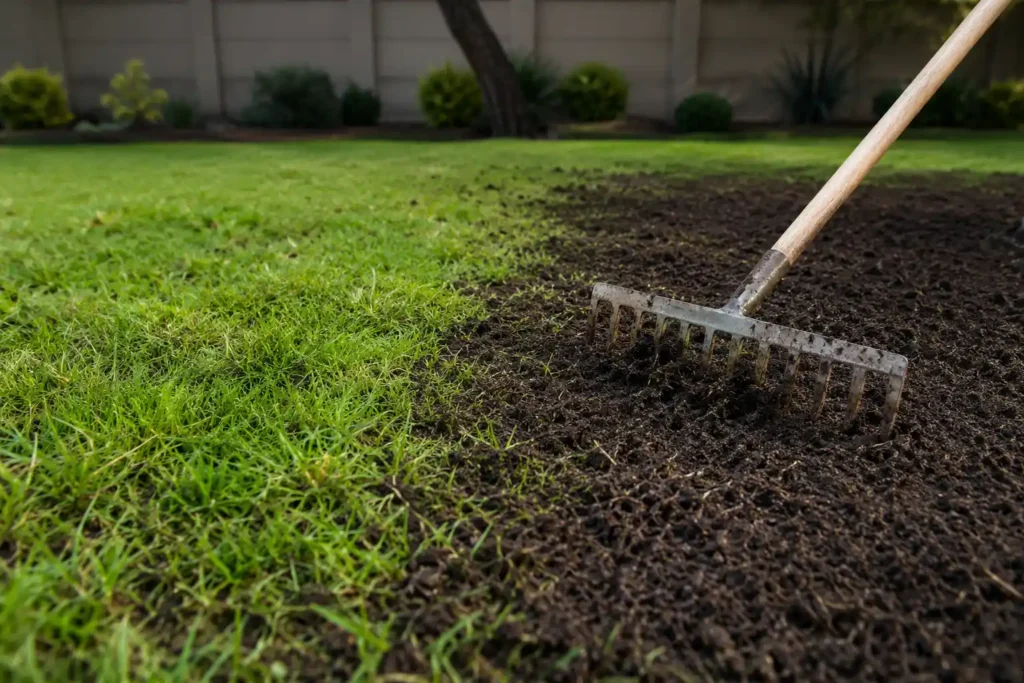
Lawn dressing is a blend of organic matter, sand, and topsoil, spread evenly over an existing lawn. Unlike topdressing with sand alone, a proper lawn dressing mix adds organic content that clay soil badly needs.
Firstly, organic matter breaks up dense clay particles. It creates small pockets of space within the soil, so water can move through instead of pooling on top. Secondly, the added material improves the balance between air, water, and solid particles in the root zone. Consequently, rainwater soaks in gradually rather than running off or sitting in puddles.
Levelling is another key benefit. Bumps and low spots collect water after rain, and grass in those areas often drowns first. When a dressing is applied and levelled correctly, water spreads evenly across the surface instead of collecting in one place. This single step often resolves the worst of a garden’s puddling problem.
Gypsum-based soil conditioners work on a similar principle. Gypsum encourages clay particles to clump together, or flocculate, which opens up drainage channels within the soil. The Royal Horticultural Society notes that organic matter is one of the most effective ways to improve clay drainage, since it physically changes how tightly clay particles bind together.
The Link Between Soil Structure and Root Growth
Healthy roots need three things: oxygen, moisture, and space to spread. Compacted clay denies all three. Roots that sit in waterlogged soil cannot access oxygen, so they stop growing downward and instead stay shallow near the surface.
Shallow roots create a knock-on effect. Grass with shallow roots dries out faster in summer, struggles to access nutrients, and shows stress during heat waves. It also pulls out easily, so the lawn thins in high-traffic areas.
Once soil structure improves, roots respond quickly. Loosened, well-drained soil allows roots to push deeper in search of moisture and nutrients. Deeper roots handle both flooding and drought better, because they draw on a larger reserve of soil moisture and remain anchored during heavy rain. This is why lawn dressing pairs so well with organic soils products like compost, which add long-term fertility on top of the structural benefits.
When Lawn Dressing Solves the Problem, and When It Doesn’t
Lawn dressing works well for lawns with moderate compaction, minor bumps, or thinning grass caused by poor soil quality. However, it isn’t a cure for every drainage issue.
If your garden has a high water table, sits in a natural low point, or floods for days after rain, dressing alone won’t solve the problem. In these cases, French drains, sloped grading, or a soakaway may need to go in before any topdressing takes place. A proper site assessment identifies which category your garden falls into, so you avoid spending money on the wrong fix.
For gardens starting completely fresh, topsoil creates the foundation before grass goes down, while lawn dressing improves an established lawn that’s already struggling. Knowing the difference matters, since applying the wrong product wastes both time and money.
Preparing Your Lawn Before Dressing
Preparation makes the biggest difference to how well lawn dressing performs. Before any dressing goes down, remove debris, weeds, and stones from the surface. Aerating or lightly scarifying the lawn opens up the existing soil, so the new dressing makes proper contact with the root zone below.
Once the lawn is prepared, apply the dressing evenly and rake it into the base of the grass rather than burying the blades completely. This allows the existing grass to keep growing while the new material improves the soil beneath it. Afterward, water lightly and avoid heavy foot traffic while the lawn settles.
Timing also matters in Midrand’s climate. Spring and early summer, when grass actively grows, give the lawn the best chance to establish quickly after dressing. Applying dressing during dormancy slows results and increases the risk of the mixture washing away before grass roots can absorb it.
Choosing the Right Grass Alongside Better Soil
Improved drainage works best when paired with a grass variety suited to Midrand conditions. Kikuyu grass handles heavy clay and high foot traffic well, making it a solid match for gardens recovering from waterlogging. For an instant lawn installation on newly improved soil, the right variety establishes faster and resists the same drainage problems returning.
Final Thoughts
Clay soil doesn’t have to mean a waterlogged lawn every winter. Lawn dressing improves soil structure, helps rainwater drain evenly, and gives roots the oxygen and space they need to grow deep and strong. For lawns with moderate compaction or uneven surfaces, it’s often the most cost-effective first step.
If your Midrand garden struggles with puddles, thinning grass, or bare patches after rain, get in touch for a free assessment. We’ll identify exactly what your soil needs, whether that’s lawn dressing, additional drainage work, or a combination of both.