Restoring Construction-Damaged Lawns with Lawn Dressing in Carlswald
Compacted soil quietly ruins more lawns than pests or bad weather ever do. In Kyalami, heavy clay and constant foot traffic press the ground down until roots struggle to breathe. In Carlswald, building work leaves lawns compressed, uneven, and stripped of topsoil. Lawn dressing solves both problems, but it works best when you understand how it fits into a proper aeration or repair process.
This guide breaks down why lawn dressing improves aeration results in Kyalami, and how the same treatment restores lawns damaged by construction in Carlswald. We’ll cover soil compaction, levelling, turf repair, and how to encourage healthy regrowth once the hard work is done.
Why Soil Compaction Holds Kyalami Lawns Back
Kyalami gardens range from large estate lawns to compact townhouse yards, yet they share one common enemy: compaction. Sprinkler systems saturate the same spots repeatedly, children and pets wear paths across the grass, and Highveld clay naturally packs tighter than sandier soils. Over time, the ground loses its air pockets. Water pools instead of soaking in, and roots stop reaching the nutrients they need.
Aeration punches through that compaction. A core aerator pulls small plugs of soil out of the lawn, opening channels for air, water, and fertiliser to reach the root zone. However, aeration alone leaves the surface full of holes and loose soil. Left untreated, many of those holes simply collapse back into compacted ground within weeks. That’s where lawn dressing comes in.
How Lawn Dressing Boosts Lawn Aeration Results
Lawn dressing fills the channels aeration creates. Instead of letting holes close up, the dressing keeps them open long enough for roots to grow through and establish themselves. Because the dressing blends organic matter into the soil profile, grass roots gain immediate access to nutrients right where they need them most.
The Royal Horticultural Society recommends working organic matter into aerated or newly prepared soil for exactly this reason: it improves both structure and fertility at the same time. Applying lawn dressing straight after aeration, rather than weeks later, gives you the best return on the aeration itself.
Levelling the Surface for Even Growth
Aeration also reveals every bump and dip hiding under thick grass. Once we spread the dressing, we level the surface carefully, smoothing shallow depressions and correcting minor slopes. This step matters because uneven ground collects water in low spots, which then drowns roots and invites fungal problems. A level lawn drains evenly, grows evenly, and looks noticeably neater from the first mow after treatment.
For Kyalami properties, we pair this process with our organic soils range, adding compost where soil fertility needs an extra boost. If you’re planning a full renovation rather than a touch-up, our instant lawns give you a walkable lawn again within days.
Can Lawn Dressing Restore Lawns Damaged by Construction in Carlswald?
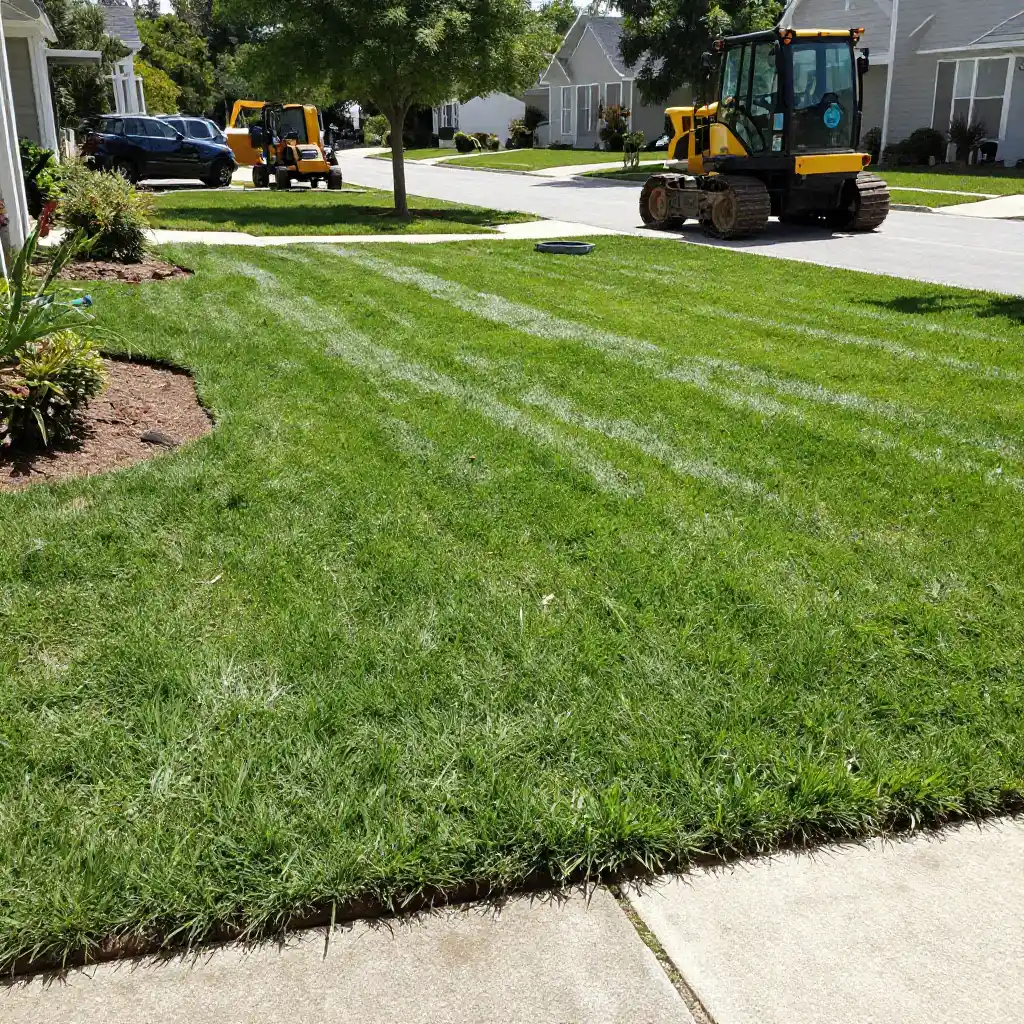
Construction work leaves a different kind of damage. Heavy machinery drives across the yard, building rubble gets buried under a thin layer of soil, and contractors often strip away the healthy topsoil that grass needs to thrive. The result is a lawn that looks flat, patchy, and lifeless once the builders leave.
Yes, lawn dressing can restore a construction-damaged lawn in Carlswald, but it rarely works alone. Because heavy machinery compacts soil far deeper than everyday foot traffic does, we usually combine aeration or light scarification with a proper dressing application. This gives the soil a genuine chance to recover, rather than papering over the problem.
Repairing Damaged Turf Step by Step
We start every Carlswald restoration with a full site assessment. We check for buried debris, drainage problems, and areas where the topsoil has thinned or disappeared entirely. Next, we clear stones, offcuts, and construction debris from the surface, since these prevent roots from spreading properly.
Once the ground is clean, we apply lawn dressing evenly across the damaged area, matching the depth to how badly the soil has degraded. Where construction has removed too much topsoil, we bring in fresh topsoil first, then finish with a dressing layer to support new growth. For badly patched lawns, reseeding alone often isn’t enough, so we sometimes recommend replacing damaged sections with fresh Kikuyu Grass or LM Berea Grass, depending on the site’s sun exposure.
Encouraging Regrowth After Renovation
Grass needs time to recover after any construction project, and lawn dressing speeds that timeline up considerably. Because the dressing sits directly around the existing root system, grass spreads sideways into repaired patches instead of relying purely on new seed to fill gaps. The University of Vermont Extension notes that adding organic matter to compacted soil steadily builds the air space roots need, which is exactly the mechanism that helps a construction-damaged lawn bounce back.
Consistent watering during the following weeks matters just as much as the treatment itself. Deep, infrequent watering pushes roots further down into the improved soil, rather than keeping them shallow. Within a season, most Carlswald lawns treated this way recover their colour, density, and even growth pattern.
Getting Lawn Dressing Right in Kyalami and Carlswald
Every lawn compacts and damages differently, so the right lawn dressing plan depends on your specific soil, site history, and how the lawn gets used day to day. Our team assesses each Kyalami and Carlswald property individually before recommending aeration, dressing, topsoil, or a full instant lawn replacement.
If your lawn feels hard underfoot, drains poorly, or still looks patchy after recent building work, get in touch with Turf Company Midrand for a free, no-obligation site assessment.