
How to Keep Artificial Grass Edges Secure in Midrand
Lifting edges rank among the most common complaints from artificial grass owners. The good news? You can prevent them almost entirely with the right base preparation, edging method, and a bit of routine care. This guide walks you through why edges lift in Midrand gardens, how to fix them once they do, and what keeps your lawn flat for years to come.
Why Artificial Grass Edges Lift in Midrand
Midrand’s climate swings between intense summer heat and heavy seasonal rain. Both extremes put pressure on synthetic turf, especially along the perimeter. Heat causes the backing material to expand slightly during the day and contract at night. Over time, this constant movement works fixing pins loose if they weren’t driven in correctly the first time.
Rain adds another challenge. Poor drainage lets water pool under the edges, softening the base and letting the turf shift. Foot traffic near doorways, pool decks, and pathways speeds up the process further, since edges near high-use zones take the most repeated pressure.
Ultimately, most lifting problems trace back to one root cause: rushed or incorrect installation. Get the groundwork right, and the rest becomes far easier to manage.
Get the Base Right Before the Turf Ever Goes Down
Every stable lawn starts below the surface, not on top of it.
Compact the Base Layer Properly
Before laying any artificial grass, the base needs proper excavation and compaction. Skipping this step is the single biggest cause of shifting edges. A compacted layer of crushed stone, typically 50 to 75mm deep, gives the turf a firm, stable surface to grip. Without it, the ground settles unevenly, and edges pull away within months.
Add a Weed Barrier That Won’t Shift
A weed membrane sits between the compacted base and the turf backing. It stops growth from underneath while also helping the surface stay flat. Overlapping the membrane by at least 100mm at every seam prevents gaps from forming, which in turn stops the edges above from sinking or curling.
Proper Edging Methods That Keep Turf Flat
Once the base is solid, the edging method you choose determines how long your lawn stays secure.
Timber and Bender Board Edging
Timber or bender board edging creates a firm boundary around flower beds, pathways, and lawn perimeters. It contains the base material, so it won’t spread into surrounding areas, and it gives installers a solid surface to nail the turf into. This method works particularly well for landscaping turf around garden features.
Galvanised Pins and Fixing Nails
Galvanised turf pins, spaced roughly every 150mm around the perimeter, anchor the grass firmly into the compacted base. Corners and high-traffic zones need extra pins, since these areas absorb the most stress. Rusted or thinly spaced pins are a leading reason older installations start lifting.
Adhesive on Paved Borders
Where turf meets a paved edge, such as a patio or driveway, adhesive bonding gives a cleaner finish than pins. A strong, weather-rated adhesive applied along a clean, dry border holds the turf tight without visible fixings. This approach suits pet turf installations especially well, since pins near play areas can pose a safety risk.
How to Fix Loose or Lifting Edges
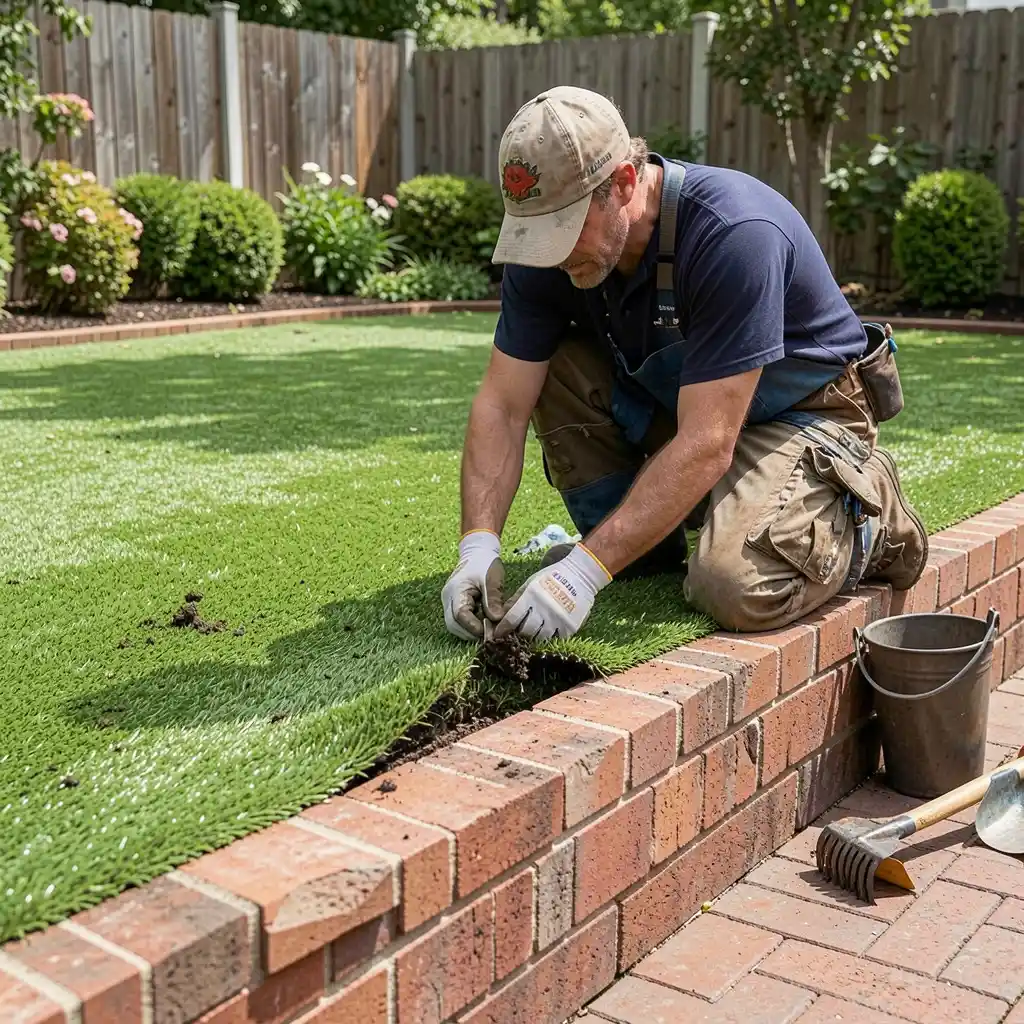
If you’re already dealing with lifted edges, don’t worry. Most fixes are straightforward. Start by pulling back the affected section and checking the base underneath. Compacted, dry ground means you can simply re-secure the turf. Soft or waterlogged ground, however, needs re-levelling before you refit anything.
Next, replace any rusted or bent pins with new galvanised ones, spacing them closer together than the original layout. For paved edges, scrape away old adhesive residue completely before applying a fresh bead, since old glue prevents proper bonding. Finally, press the edge down firmly and add extra infill along the seam to weigh it down while the fix settles in.
According to a step-by-step installation guide from Lowe’s, adding extra infill specifically along outer edges reduces the chance of turf becoming loose over time. This small step makes a noticeable difference on Midrand properties exposed to strong summer downpours.
Ongoing Maintenance to Stop Edges from Lifting Again
Prevention doesn’t end at installation. Regular brushing keeps the fibres upright and stops infill from shifting away from the edges. After heavy storms, walk the perimeter and check for any pins working loose or areas where water has pooled against the border. Catching small movement early means a five-minute fix instead of a full edge replacement later.
Topping up infill every year or two also helps, since infill adds weight along the border and keeps the backing pressed firmly against the ground. If you installed multisport turf for a home court or play area, check the perimeter more often, as concentrated activity near the edges accelerates wear.
Industry bodies such as the Synthetic Turf Council publish technical guidelines confirming that correct edge fixing and ongoing maintenance directly extend a lawn’s usable lifespan. Following these standards protects both the look and the performance of your investment.
Call In Turf Company Midrand for a Lasting Installation
A lawn that stays flat starts with the team that installs it. Our installers prepare every base correctly, choose the right edging method for your space, and use quality fixings built to handle Midrand’s heat and rain. Read more about our approach and experience or get in touch for a free, no-obligation quote on your next artificial grass project.
Frequently Asked Questions
Why do my artificial grass edges keep lifting?
Lifting usually comes from an under-compacted base, worn or rusted fixing pins, or water pooling along the perimeter. Correcting the base and refitting the edges properly solves most cases.
How often should I check my artificial grass edges?
Inspect the perimeter every few months, and always after heavy rain or strong wind. Catching loose spots early prevents bigger repairs down the line.
Can I fix lifting edges myself?
Minor lifting near pinned edges is a manageable DIY fix. However, base-level problems or large sections of loose turf usually need a professional reassessment to avoid recurring damage.
Does the type of artificial grass affect how well the edges hold?
Yes. Denser, higher-quality turf backing holds fixings more securely than thinner budget alternatives, which is why material choice matters as much as the installation method.