
Should You Use Lawn Dressing or Compost for Your Midrand Garden?
Every healthy lawn starts underground, not on the surface. Yet most homeowners only notice a problem once the grass turns patchy or pale. At that point, the real question is not which product looks best on a shelf. Instead, it’s which soil treatment actually fixes the issue.
Two options come up again and again: lawn dressing and compost. Both improve soil, but they work in different ways and suit different situations. This guide breaks down what each one does, when to use it, and how Midrand’s soil conditions affect the decision. At Turf Company Midrand, we apply both products daily, so we know exactly where each one earns its place in a Highveld garden.
What Is Lawn Dressing?
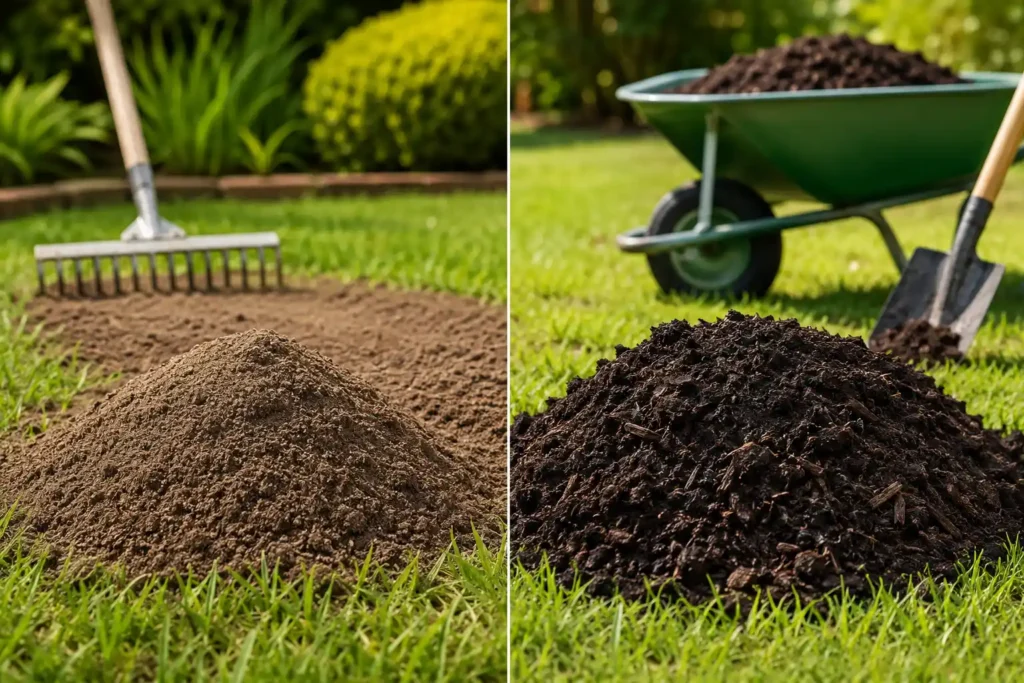
Lawn dressing is a fine, organic soil blend spread over an existing lawn. Rather than replacing the soil, it works its way between the grass blades and settles onto the surface below. From there, it levels bumps, fills shallow dips, and feeds the root zone without smothering the grass.
Because it’s applied thinly, lawn dressing suits lawns that already have decent grass coverage but need a boost. Think of it as a top-up rather than a rebuild. It corrects uneven patches, improves drainage on compacted ground, and thickens grass that’s started to thin out.
What Is Compost?
Compost is decomposed organic matter, rich in nutrients and beneficial microorganisms. Unlike lawn dressing, it isn’t limited to established lawns. Gardeners dig it into vegetable beds, mix it into flower borders, and work it into the ground before laying a new lawn.
Compost feeds the soil itself. It loosens heavy clay, helps sandy soil hold onto water, and builds long-term fertility that supports whatever you plant next. So, while lawn dressing focuses on the surface of a lawn, compost works more broadly across the whole garden.
Lawn Dressing vs Compost: The Core Difference
The distinction comes down to purpose. Lawn dressing repairs and levels a lawn that’s already growing. Compost, on the other hand, builds soil health before or alongside planting.
That said, the two aren’t rivals. Many Midrand gardens benefit from both: compost to prepare the ground, and lawn dressing to maintain the lawn once it’s established. Understanding this difference makes it far easier to choose the right product for the job in front of you.
When to Use Lawn Dressing in Midrand
If your lawn already exists but looks uneven, thin, or tired, lawn dressing is usually the better fit. It works well after aeration, since the holes let nutrients reach the roots more directly. Consequently, grass recovers faster and grows in thicker.
Homeowners with Kikuyu Grass lawns often apply dressing in spring, right as the grass enters its active growing season. Applied at the wrong time, however, dressing sits on dormant grass without doing much. Therefore, timing matters just as much as the product itself.
When to Use Compost in Midrand
Compost makes the most sense before you plant anything new. If you’re preparing ground for an instant lawn, working compost into the topsoil first gives roots a head start and speeds up establishment. The same applies to garden beds and vegetable patches, where ongoing soil fertility matters more than surface levelling.
Midrand’s clay-heavy soil, in particular, benefits from regular compost applications. Clay compacts easily and drains poorly, so adding organic matter loosens it up and lets air and water move through more freely. Over time, this reduces waterlogging and gives roots room to spread.
Why Midrand’s Soil Makes This Decision Important
Midrand sits on the Highveld, where soil composition shifts noticeably from one suburb to the next. Some areas have heavier clay, while others lean sandier and drain too quickly. Because of this variation, a generic soil solution rarely performs consistently across the whole region.
Organisations such as the Agricultural Research Council and South Africa’s Department of Agriculture, Land Reform and Rural Development publish guidance on soil health that backs up what local landscapers already see on the ground: soil testing and targeted amendments outperform one-size-fits-all treatments. That’s why we assess each property individually before recommending organic soils, rather than applying the same mix everywhere.
Can You Use Lawn Dressing and Compost Together?
Yes, and in many cases, combining them delivers the best results. Compost prepares the foundation, especially before laying new grass or renovating tired beds. Lawn dressing then maintains that foundation once grass has established, keeping the surface level and the roots fed.
For new installations, we typically enrich the ground with compost or topsoil first, then follow up with lawn dressing during routine maintenance. This staged approach keeps the lawn healthy from the roots up, rather than patching problems after they appear.
Get the Right Soil Solution for Your Garden
Choosing between lawn dressing and compost doesn’t have to be guesswork. The right choice depends on your soil type, what’s already growing, and what you’re trying to achieve. A quick site assessment usually settles the question far faster than trial and error.
Turf Company Midrand supplies and applies both products across the area, alongside instant lawns and artificial grass installations. If your lawn needs levelling, your garden beds need feeding, or you’re simply not sure where to start, get in touch and we’ll recommend the right solution for your soil.