
The Best Way to Prepare for Artificial Grass Installation in Midrand
Installing artificial grass in Midrand can transform a tired, patchy yard into a lush, low-maintenance space within days. However, the finished result depends almost entirely on the work you do before the turf even arrives. Skip a step, and you risk pooling water, uneven surfaces, or a lawn that sags within a year. Get the groundwork right, and your artificial grass will stay flat, drain properly, and look good for well over a decade.
Below, we walk through exactly what needs to happen before installation day, from measuring your space to fixing drainage issues that many homeowners overlook.
Measure Your Space Accurately First
Before you order anything, measure the full area you want to cover. Walk the perimeter and note any curves, flower beds, trees, or steps that will affect the final shape. Because artificial grass comes in fixed roll widths, accurate measurements help you avoid unnecessary offcuts and reduce visible seams once the turf is down.
It also pays to measure twice. Small errors add up quickly on larger properties, and reordering extra material later often means a slightly different batch colour. If you’re unsure how to translate an irregular garden shape into a materials list, our team can assess the site for you and confirm exact quantities before you commit to a quote.
Clear the Existing Grass and Any Debris
Once you have your measurements, the next job is removing what’s already there. Old grass, roots, weeds, and rocks all need to go, since anything left behind can push up through the new surface or create uneven patches over time. Most installers strip the top 75 to 100 millimetres of soil, which removes the root layer along with any old irrigation debris.
This stage also reveals problems you couldn’t see before, such as old tree roots, buried rubble, or shallow irrigation pipes. Dealing with these issues now, rather than after the turf goes down, saves you from costly repairs later. If your yard previously had a natural lawn, this is also the point where any leftover organic soils, like old compost or topsoil, get cleared away so the base can be built on solid, compacted ground.
Fix Drainage Problems Before They Become Permanent
Drainage is the step homeowners underestimate most. Because Midrand experiences heavy summer downpours, standing water is a real risk if the base beneath your turf can’t shed rainfall quickly. Before installation, check how water currently moves across your yard. Does it pool near the house? Does one corner stay wet long after the rest has dried?
Correcting these issues before laying artificial grass matters more than most people realise, since surface fixes won’t solve a drainage problem buried beneath the ground. The Royal Horticultural Society’s guide on installing garden drainage explains how a simple percolation test, digging a hole and timing how fast it drains, tells you whether your soil needs extra intervention before any hard landscaping goes in. Once you know the drainage picture, your installer can grade the sub-base correctly and, where needed, add a stone drainage layer so water moves through the turf rather than sitting on top of it.
Build a Solid, Compacted Sub-Base
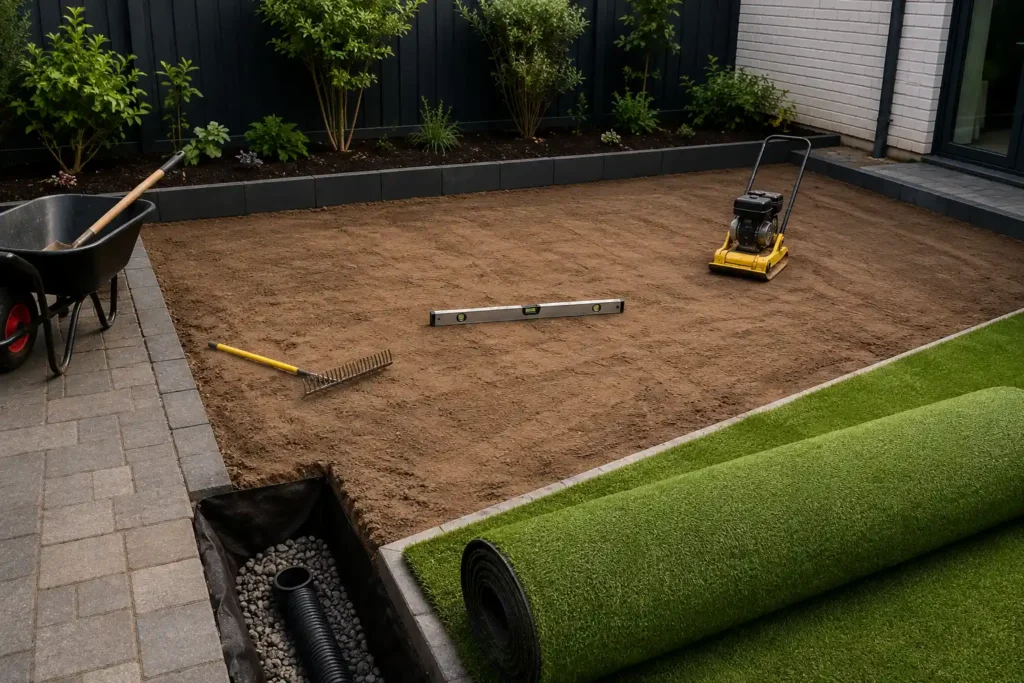
With the site cleared and drainage sorted, the next stage is the sub-base itself. A typical build-up includes a weed barrier, a layer of compactable stone aggregate, and careful compaction with a plate compactor. This base does the real work of keeping your lawn flat and stable, since the turf on top is only as good as what sits beneath it.
The Synthetic Turf Council’s technical guidelines note that aggregate hardness and permeability vary significantly by source, which is why installers test and grade the material rather than using whatever is cheapest or closest to hand. Skimping on this stage is the single biggest reason artificial lawns develop dips, wrinkles, or soggy patches within a year or two of installation.
Check What the Space Will Be Used For
Before the base goes in, think about how the area will actually get used. A family garden with dogs needs a different build-up to a play area for children, and a putting green needs a different finish again. Our Pet Turf range, for example, includes drainage and odour-control features that a standard landscaping lawn doesn’t need, while Playground Turf prioritises shock absorption for safety. Flagging the intended use early means the base and infill get specified correctly from the start, instead of retrofitted later.
Confirm Access and Site Logistics
Finally, walk through the practical side of the job. Installers need clear access for equipment, a place to stockpile removed soil temporarily, and awareness of any underground services, such as irrigation lines or electrical cabling, that run through the area. Flagging these details upfront keeps the installation on schedule and avoids surprises once digging starts.
Ready to Start Your Artificial Grass Project?
Good preparation is what separates a lawn that lasts fifteen years from one that needs redoing in three. From measuring and clearing the site to fixing drainage and compacting the base, each step protects the investment you’re making in your new outdoor space. If you’d like a professional site assessment before you commit to anything, get in touch with our team for a free, no-obligation quote tailored to your Midrand property.